


Mohammed Firawi has never been to Africa. Born and raised in the Old City of Jerusalem, Mohammed says he identifies as Palestinian but takes pride in his African ancestry. He is tall and lanky, with a relaxed demeanor, hardly indicative of the troubled city in which he lives.
Mohammed is third-generation Sudanese on his father’s side, hailing from the capital city, Darfur; his mother is Jerusalemite Palestinian. He, like the majority of Afro-Palestinians in Jerusalem, lives in the tiny quarter known as the African community of Jerusalem. Their story, as unique as the cobblestones of the ancient city, is one of pilgrimage, religious devotion and of course, the shackles of the Israeli occupation.
Down the stone steps of Damascus Gate and through the thick archaic walls of the Old City, one only has to walk about a kilometer to discover this neighborhood, tucked deep within the Muslim Quarter and directly adjacent to the Aqsa Mosque Compound. The two stone arched entrances on either side of Ala Eddin Street, open to a community of approximately 350 people with a rich and fascinating history.
Afro-Palestinians are probably not the first community that comes to mind when discussing the history of Jerusalem. They are a minority, unassuming and underexposed in relation to other communities. Nonetheless, they are an integral and intrinsic part of the mosaic patchwork that makes up the Old City.
The Afro-Palestinians, much like other ethnic communities in the Old City such as the Armenians, have a distinct identity within their nationalist identity as Palestinians. Theirs is a story worth telling.
While the arrival of African Muslims to Jerusalem dates back to 634, most African Muslim pilgrims came to the city during the British Mandate, as part of their spiritual pilgrimage to Mecca. Devoted Muslims, the Africans, hailing from Chad, Nigeria, Senegal and Sudan, made a second pilgrimage to the Aqsa Mosque after completing the journey to Mecca. They were hosted by the Islamic Waqf [an endowment in charge of overseeing Muslim sites in Jerusalem] and allowed to stay in the two quarters adjacent to the Mosque, built by the Mamluks over 700 years prior, during the Ottoman dynasty.
During this period, the two quarters were used as prisons, but were shut down during the British Mandate of Palestine. Later, the Islamic Waqf reclaimed the compounds, eventually leasing them to the Africans, who were pious and fiercely protective of their faith. In exchange for the residences, the African Muslims protected and guarded the Aqsa Mosque.
The months’ long pilgrimage turned into years when the Africans ended up staying in Palestine, largely due to the creation of Israel in 1948 and the subsequent closure of the borders. They had planned to make pilgrimage to the city, fulfill their religious duties and go home, where most had families waiting for them. Mohammed’s grandfather was no exception. He also made pilgrimage to Jerusalem in the early 40s, leaving behind two wives and four children in Darfour. After the nascent state of Israel sealed the borders, his grandfather, Haj Mousa, stayed, feeling an obligation to protect the city and the Aqsa Mosque, from its Zionist invaders.
Once the African Muslims – many who were already Arabic-speaking and all who were well versed in the Quran – realized they not returning to their motherlands, they decided to create new families for themselves, marrying Palestinian women and producing children who would be born and raised in Palestine.
For Mohammed, his ancestry is part of his identity and culture, but admits he does not know much about the African side of his family, except for the stories told by his father and late grandfather. His Palestinianism, however, is evident in his mannerisms and in his political past.
“I was arrested [by Israeli occupation forces] when I was 17-years old,” he recounts, ‘and was sentenced to eight years in prison. When I was released, I was 25.” These are formative years for any young person, but especially for a Palestinian, who was put behind Israeli bars as a child and released as a man, only to find the occupation even more entrenched than before.
“Living in the Old City is not easy. We face the same obstacles as any other Palestinian and sometimes even more,” he says. He is referring to the extreme militarization of the Old City, which over the years has risen to unprecedented levels.
“Any Palestinian, man, woman or youth who walks to Damascus Gate can expect at least three or four military checkpoints where police or soldiers can stop you, demand your ID and question you at random,” he explains. “At night, we think a thousand times before deciding to leave the house.”
Despite the difficulties of life under occupation, for the majority of Afro-Palestinians in Jerusalem, the liberation of Palestine is in their DNA. The first Palestinian female prisoner, Fatima Barnawi, was from the community and Osama Jeddeh, an 18-year old Afro- Palestinian was shot dead by Israeli forces in September, 2000, and like the rest of Palestinian society, dozens of Afro-Palestinians have experienced the harrowing conditions of Israeli prisons.
In spite of the social and political obstacles facing this community and Palestinians at large, Mohammed continues to display a resilience and defiance characteristic of his people. “The youth have the biggest role in our liberation. Youth have always been the main catalyst for change and revolution anywhere, and Palestine is no different.”
Engaged to be married, Mohammed says he will teach his children about their African ancestry, even though he has never set foot in Sudan. “It is part of who I am, I will never deny that.”
When liberation comes, the Afro-Palestinians of Jerusalem’s Old City will be at the forefront of celebrations, looking forward to what the future holds, but never forgetting their African roots that forged their pathway to Palestine.
Afro-Palestinians are probably not the first community that comes to mind when discussing the history of Jerusalem. They are a minority, unassuming and underexposed in relation to other communities. Nonetheless, they are an integral and intrinsic part of the mosaic patchwork that makes up the Old City. The Afro-Palestinians, much like other ethnic communities in the Old City such as the Armenians, have a distinct identity within their nationalist identity as Palestinians. Theirs is a story worth telling
The Pilgrimage of a Lifetime: Jerusalem's Afro-Palestinians
Date posted: November 03, 2026
By MIFTAH
Mohammed Firawi has never been to Africa. Born and raised in the Old City of Jerusalem, Mohammed says he identifies as Palestinian but takes pride in his African ancestry. He is tall and lanky, with a relaxed demeanor, hardly indicative of the troubled city in which he lives.
Mohammed is third-generation Sudanese on his father’s side, hailing from the capital city, Darfur; his mother is Jerusalemite Palestinian. He, like the majority of Afro-Palestinians in Jerusalem, lives in the tiny quarter known as the African community of Jerusalem. Their story, as unique as the cobblestones of the ancient city, is one of pilgrimage, religious devotion and of course, the shackles of the Israeli occupation.
Down the stone steps of Damascus Gate and through the thick archaic walls of the Old City, one only has to walk about a kilometer to discover this neighborhood, tucked deep within the Muslim Quarter and directly adjacent to the Aqsa Mosque Compound. The two stone arched entrances on either side of Ala Eddin Street, open to a community of approximately 350 people with a rich and fascinating history.
Afro-Palestinians are probably not the first community that comes to mind when discussing the history of Jerusalem. They are a minority, unassuming and underexposed in relation to other communities. Nonetheless, they are an integral and intrinsic part of the mosaic patchwork that makes up the Old City.
The Afro-Palestinians, much like other ethnic communities in the Old City such as the Armenians, have a distinct identity within their nationalist identity as Palestinians. Theirs is a story worth telling.
While the arrival of African Muslims to Jerusalem dates back to 634, most African Muslim pilgrims came to the city during the British Mandate, as part of their spiritual pilgrimage to Mecca. Devoted Muslims, the Africans, hailing from Chad, Nigeria, Senegal and Sudan, made a second pilgrimage to the Aqsa Mosque after completing the journey to Mecca. They were hosted by the Islamic Waqf [an endowment in charge of overseeing Muslim sites in Jerusalem] and allowed to stay in the two quarters adjacent to the Mosque, built by the Mamluks over 700 years prior, during the Ottoman dynasty.
During this period, the two quarters were used as prisons, but were shut down during the British Mandate of Palestine. Later, the Islamic Waqf reclaimed the compounds, eventually leasing them to the Africans, who were pious and fiercely protective of their faith. In exchange for the residences, the African Muslims protected and guarded the Aqsa Mosque.
The months’ long pilgrimage turned into years when the Africans ended up staying in Palestine, largely due to the creation of Israel in 1948 and the subsequent closure of the borders. They had planned to make pilgrimage to the city, fulfill their religious duties and go home, where most had families waiting for them. Mohammed’s grandfather was no exception. He also made pilgrimage to Jerusalem in the early 40s, leaving behind two wives and four children in Darfour. After the nascent state of Israel sealed the borders, his grandfather, Haj Mousa, stayed, feeling an obligation to protect the city and the Aqsa Mosque, from its Zionist invaders.
Once the African Muslims – many who were already Arabic-speaking and all who were well versed in the Quran – realized they not returning to their motherlands, they decided to create new families for themselves, marrying Palestinian women and producing children who would be born and raised in Palestine.
For Mohammed, his ancestry is part of his identity and culture, but admits he does not know much about the African side of his family, except for the stories told by his father and late grandfather. His Palestinianism, however, is evident in his mannerisms and in his political past.
“I was arrested [by Israeli occupation forces] when I was 17-years old,” he recounts, ‘and was sentenced to eight years in prison. When I was released, I was 25.” These are formative years for any young person, but especially for a Palestinian, who was put behind Israeli bars as a child and released as a man, only to find the occupation even more entrenched than before.
“Living in the Old City is not easy. We face the same obstacles as any other Palestinian and sometimes even more,” he says. He is referring to the extreme militarization of the Old City, which over the years has risen to unprecedented levels.
“Any Palestinian, man, woman or youth who walks to Damascus Gate can expect at least three or four military checkpoints where police or soldiers can stop you, demand your ID and question you at random,” he explains. “At night, we think a thousand times before deciding to leave the house.”
Despite the difficulties of life under occupation, for the majority of Afro-Palestinians in Jerusalem, the liberation of Palestine is in their DNA. The first Palestinian female prisoner, Fatima Barnawi, was from the community and Osama Jeddeh, an 18-year old Afro- Palestinian was shot dead by Israeli forces in September, 2000, and like the rest of Palestinian society, dozens of Afro-Palestinians have experienced the harrowing conditions of Israeli prisons.
In spite of the social and political obstacles facing this community and Palestinians at large, Mohammed continues to display a resilience and defiance characteristic of his people. “The youth have the biggest role in our liberation. Youth have always been the main catalyst for change and revolution anywhere, and Palestine is no different.”
Engaged to be married, Mohammed says he will teach his children about their African ancestry, even though he has never set foot in Sudan. “It is part of who I am, I will never deny that.”
When liberation comes, the Afro-Palestinians of Jerusalem’s Old City will be at the forefront of celebrations, looking forward to what the future holds, but never forgetting their African roots that forged their pathway to Palestine.
Afro-Palestinians are probably not the first community that comes to mind when discussing the history of Jerusalem. They are a minority, unassuming and underexposed in relation to other communities. Nonetheless, they are an integral and intrinsic part of the mosaic patchwork that makes up the Old City. The Afro-Palestinians, much like other ethnic communities in the Old City such as the Armenians, have a distinct identity within their nationalist identity as Palestinians. Theirs is a story worth telling
The world will pay for our genocide
Date posted: July 13, 2024
By Joharah Baker
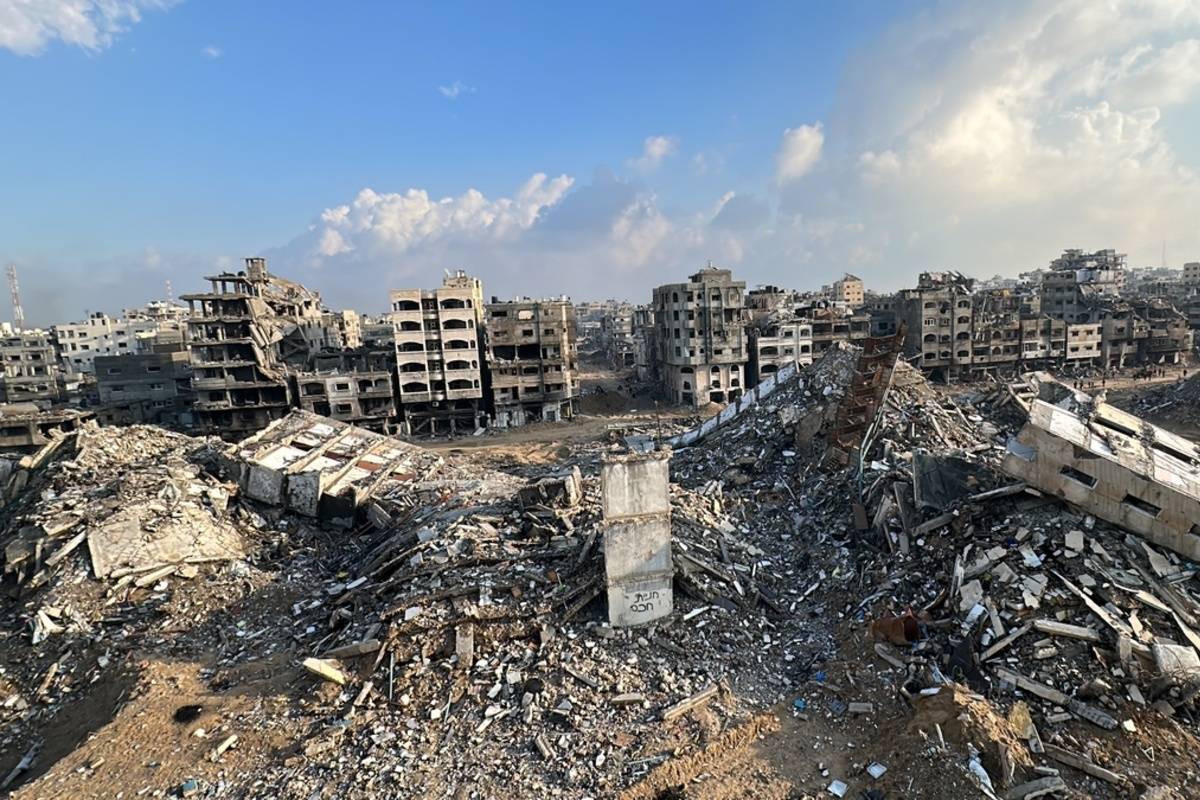
On a recent advocacy trip to Europe, I was asked by a young university student how to respond to his parents who shrug off the genocide in Gaza as something that is “unfortunately inevitable”. While this student maintained that his parents realized this was not an ideal situation, he admitted to struggling with their nonchalant attitude about the annihilation of the Palestinians. My answer was brief and to the point, albeit emotional. “Tell them: is this the kind of world you want to live in? Where a state can freely annihilate an entire people with impunity? Is this the world you want your children and grandchildren to inherit?”
The young man was well intentioned and he was clearly grappling with this existential conundrum. Jewish, he grew up in a household that believed in Israel and the Zionist project, but having witnessed what this entity and its ideology is capable of, he shifted course and is now trying to convince his parents it is their moral imperative to do the same.
Now over two months after this encounter, as Palestinians and many around the world continue to reel from the horrific scenes coming out of Gaza, this young man’s question has repeatedly crept back into my head.
In the past nine months, Israel has provided a sneak-peak into the world it envisions: one that does not question it, regardless of its atrocities; one where the word Palestine, along with its people, are wiped from map and memory. The Gaza slaughter is a foreshadowing of this new world order, which does not include us.
As the genocide grinds on mercilessly, the dead, wounded, missing and displaced soaring to unimaginable heights, a terrifying truth has dawned on us Palestinians: there is no question anymore whether the world will allow our extermination to happen or not. The answer is provided every day and with every unchecked massacre.
This world that really is callous, watching the slaughter of innocent men, women and children without blinking an eye. Or worse, they justify the rivers of Palestinian blood as “concerning” but immediately follow this up with the hackneyed phrase: “Israel has the right to defend itself,” or, “…but Hamas.” Where is the argument for the Palestinians’ right to self-defense against a brutal military occupation that has stripped them of rights and dignity for decades? Does that never calculate into the equation? Apparently not.
This is nothing new. Colonialist powers have always maligned the people under their colonization, dehumanizing them through language and deed as a means of justifying their annihilation. Indigenous peoples all over the world understand this painful reality, from New Zealand, to North and South America, to Africa and of course, Palestine. We are the “terrorists”, and the “human animals”, so our deaths will not matter.
This is where the world has it all wrong. To the parents of this young man who found his own humanity and compassion for the plight of Palestinians and was desperately seeking answers to how this compassion could be passed on to his parents, the answer is clear. The world will pay for this genocide in more ways than one, humanity being the first casualty. If “never again” signifies anything other than its literal meaning, then it means nothing at all, and this is a dangerous and slippery slope for everyone. If Israel is allowed to get away with mass murder and remain a nation among nations, who will stop Israel or others from doing this to another people ? Those who greenlighted this genocide from day one, unwittingly created a beast that will turn on them the first chance it gets.
The people united will never be divided
Date posted: April 30, 2024
By Joharah Baker
I was born in the United States and lived there through early childhood, but since returning with my family to Palestine, I have never wanted to go back. The United States has always evoked mixed feelings in me. I have a certain nostalgia for the place of my birth but my overall sentiments always culminated in a sense of resentment for this so-called superpower that has systematically aided in my people’s oppression, occupation and dehumanization.
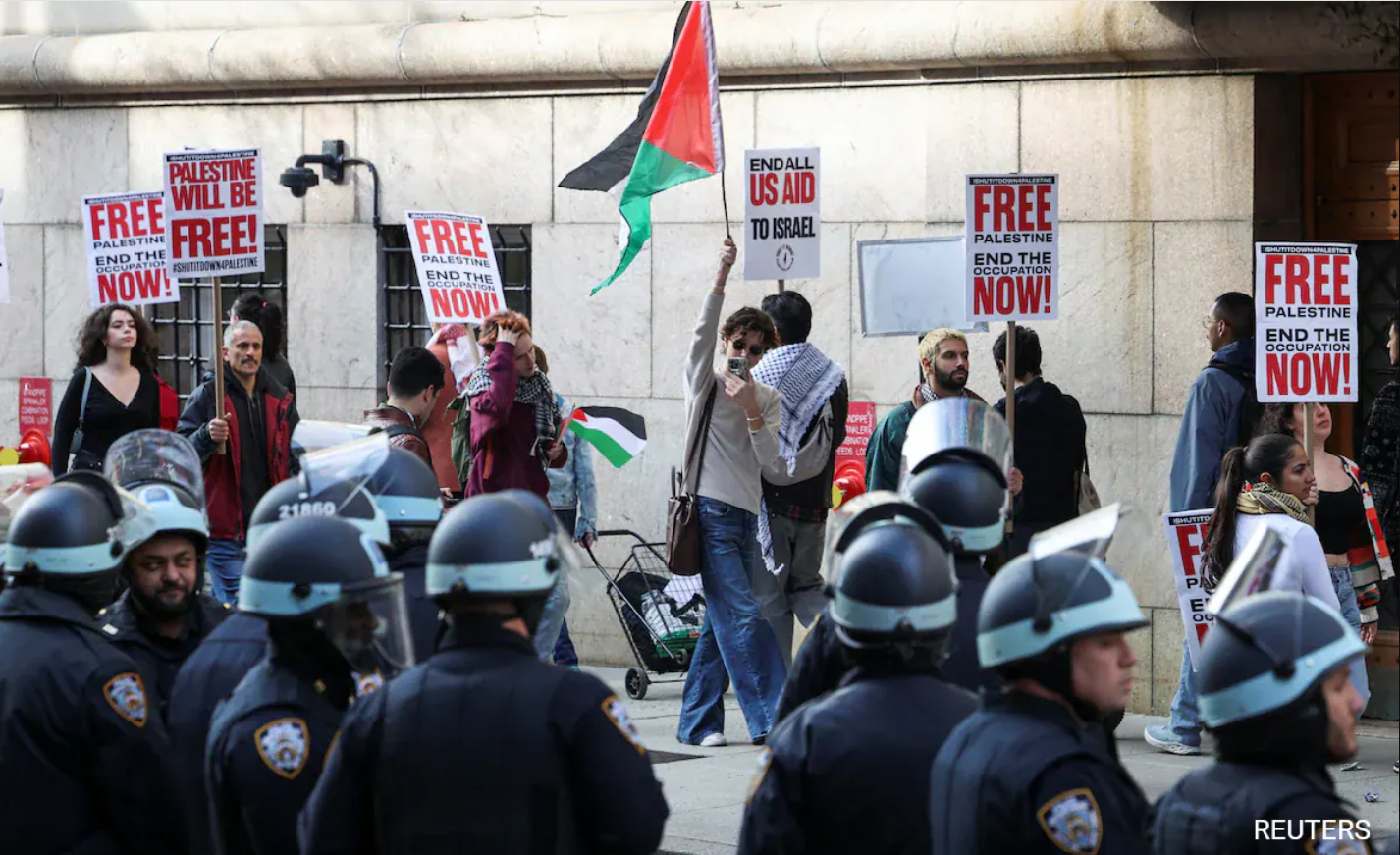
That is, until present day. The scenes of American university campuses breaming with students in kuffiyehs, waving Palestinian flags and resisting the brutality of the police and their own university administrations, has uplifted my spirit in ways I cannot fully articulate. In a word, what is happening on US campuses today is validation of our people, of Palestine and of our struggle. To those who live comfortable lives in free countries, this may sound like an exaggeration, but for my people, who have been denied their very right to exist, who have been demoralized, demonized and dehumanized, this is huge. We are seeing students of all races, creeds, backgrounds and religions, calling for an end to the genocide in the Gaza Strip and marching for a free Palestine and divestment from the Israeli occupation. We are hearing Jewish voices, debunking Zionist propaganda and its below-the-belt attempts to conflate anti-Zionism with anti-Semitism. We are being validated for our struggle, for our resistance against oppression, occupation and settler-colonialism and we are finally being heard and seen.
Students have always been the litmus test for social and political justice. Rallies and demonstrations on university campuses have been the driving force against imperialist wars throughout the ages, the Vietnam War being the best example. However, what is so incredible about this movement is that American students are not directly involved in Palestine. Students are not being drafted into an army to fight on foreign soil, so the stakes are not as high for them at the personal level. What is happening today is the direct result of the intersectionality of struggles and the belief that no one is free until all of us are free. This is a force far more powerful than a genocidal regime will ever be.
The scenes from university campuses in the United States and now in Europe, juxtaposed against the crushing images from the Gaza Strip, are a balm for our wounded hearts. We feel a kinship with these incredible Gen Zs who have put their very lives on the line for Palestine. We send them love, energy and solidarity as we watch them being thrown to the ground, handcuffed and arrested and we burst with pride as we hear them chant ‘Free Palestine”.
This is a moment in time that must not be squandered. May these American university protests spread like wildfire throughout campuses across the world, putting to shame both Zionism and American imperialism, which has allowed this racist ideology to survive. The Palestinians have never wavered in their determination to liberate their land from Israeli occupation and oppression, whether they do it alone or with the help of friends. Today, thanks to the beautiful people all over the world who have championed our cause alongside of us, a free Palestine is not only an inevitability, it is just around the corner.