|
MIFTAH holds conference in Ramallah and Gaza, calling for Participatory and Complementary Governance as Public Policy
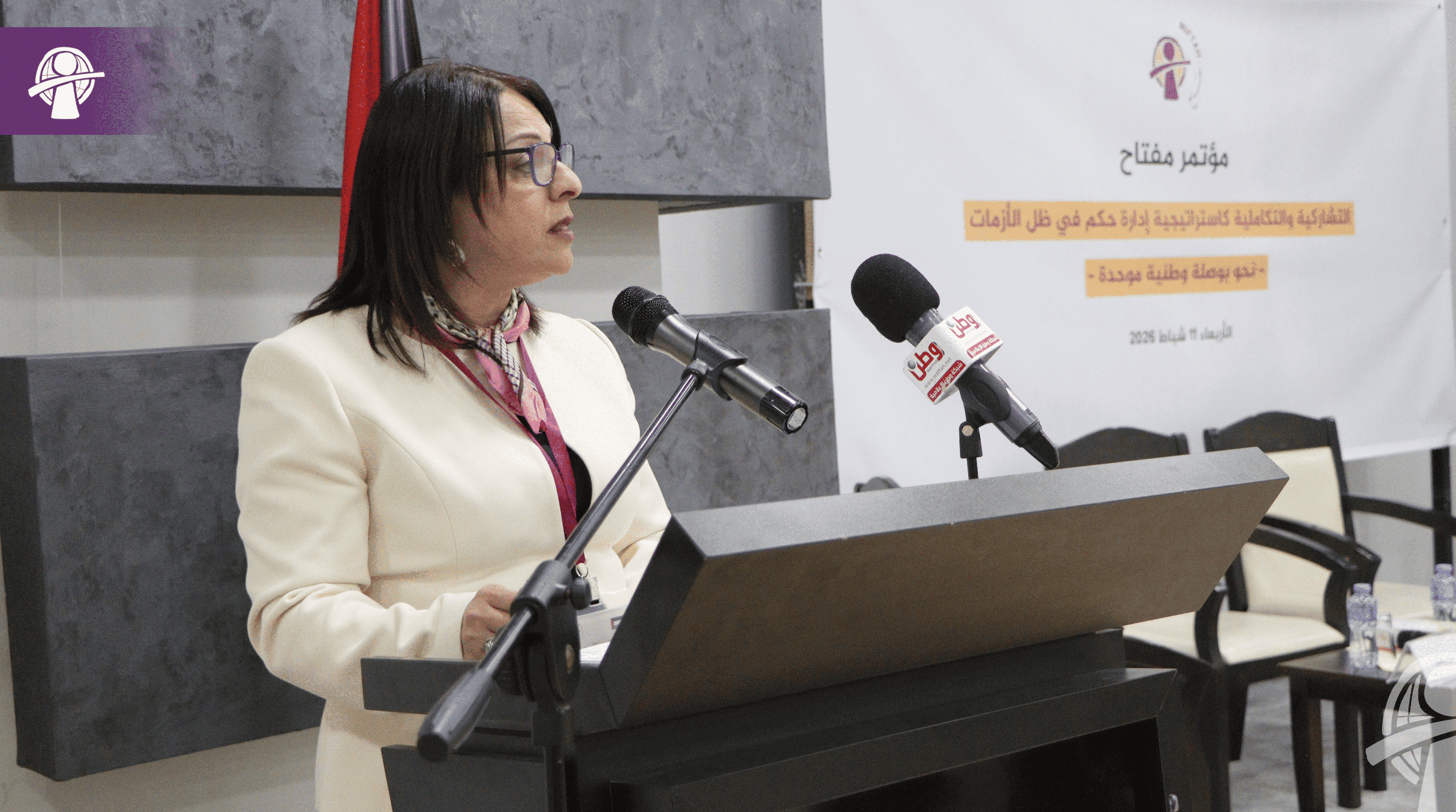
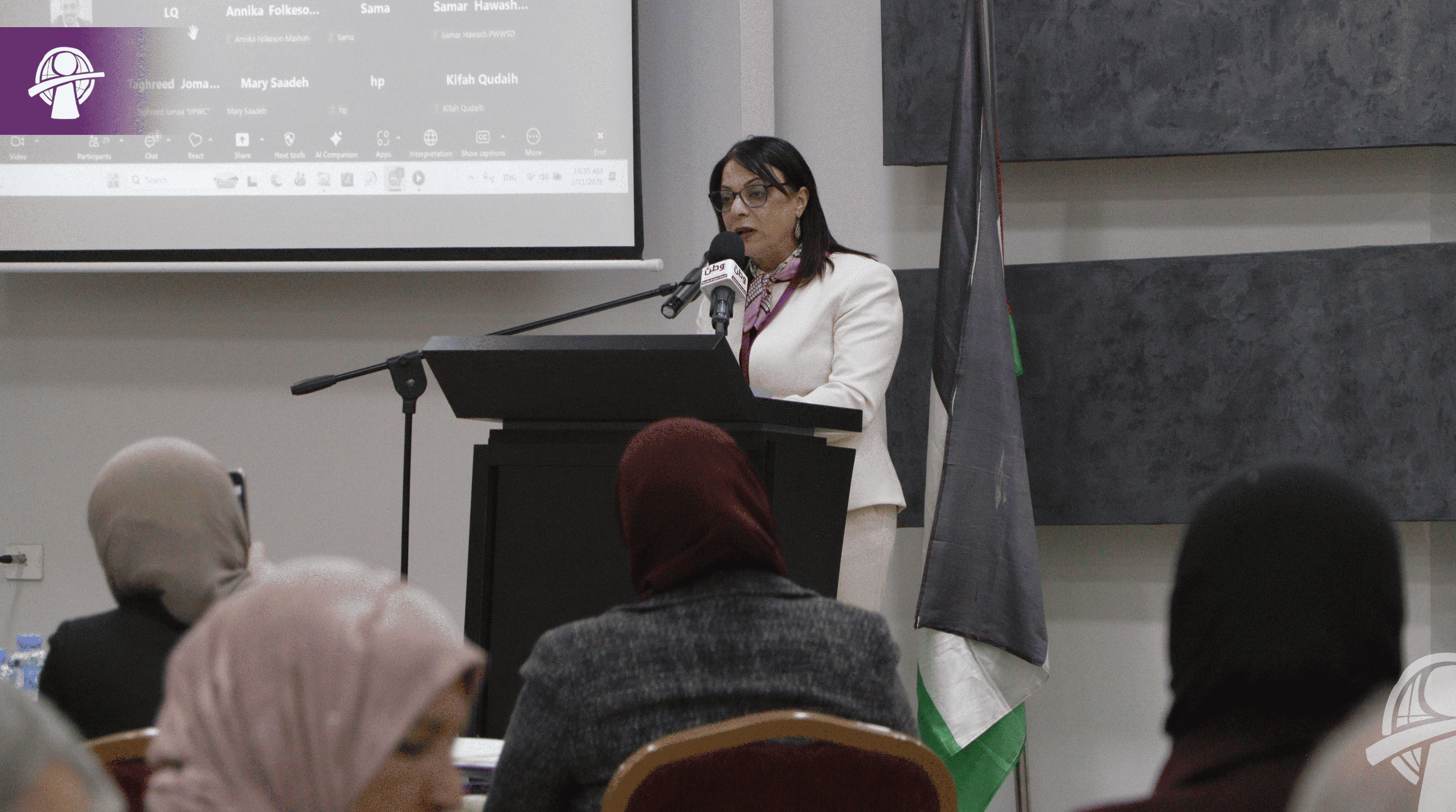
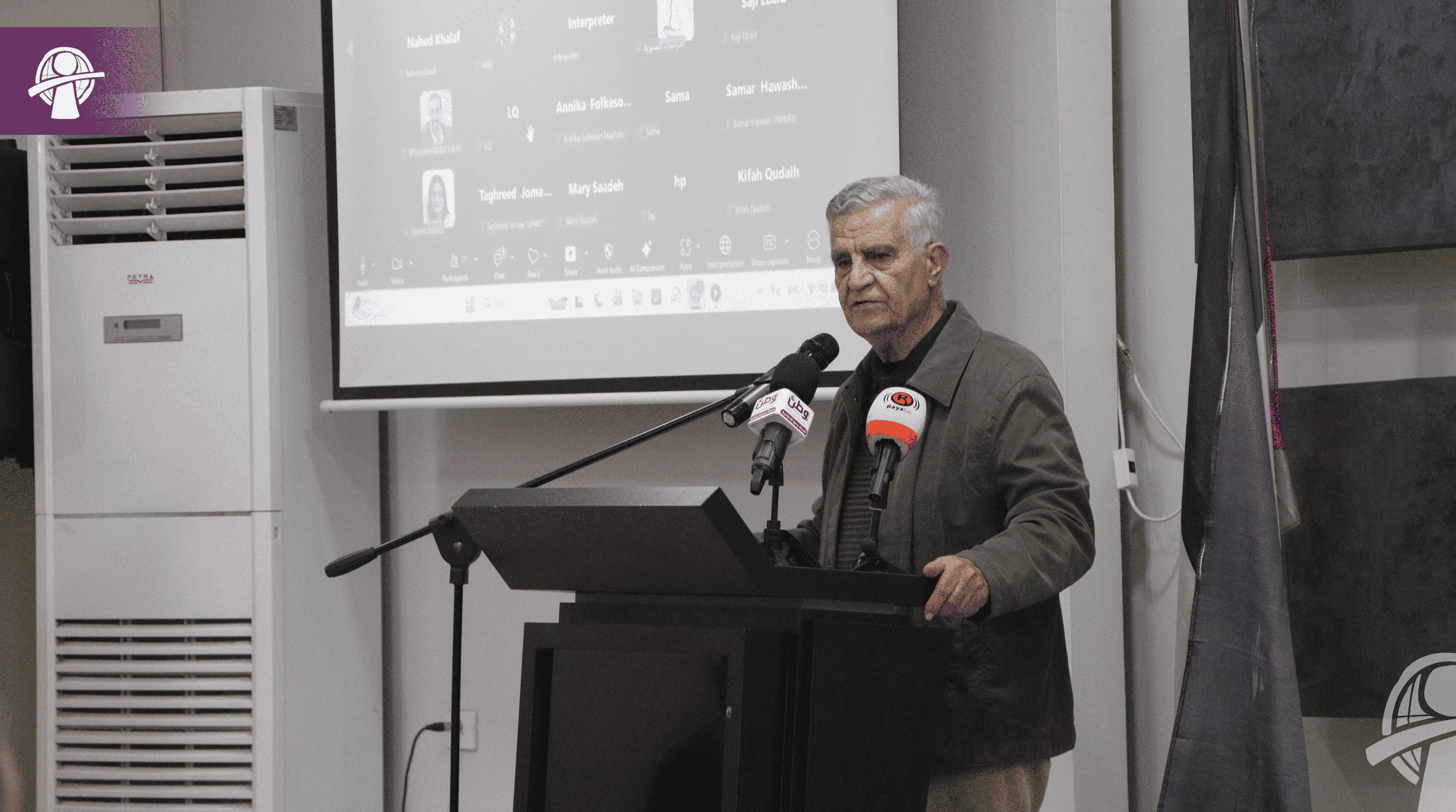
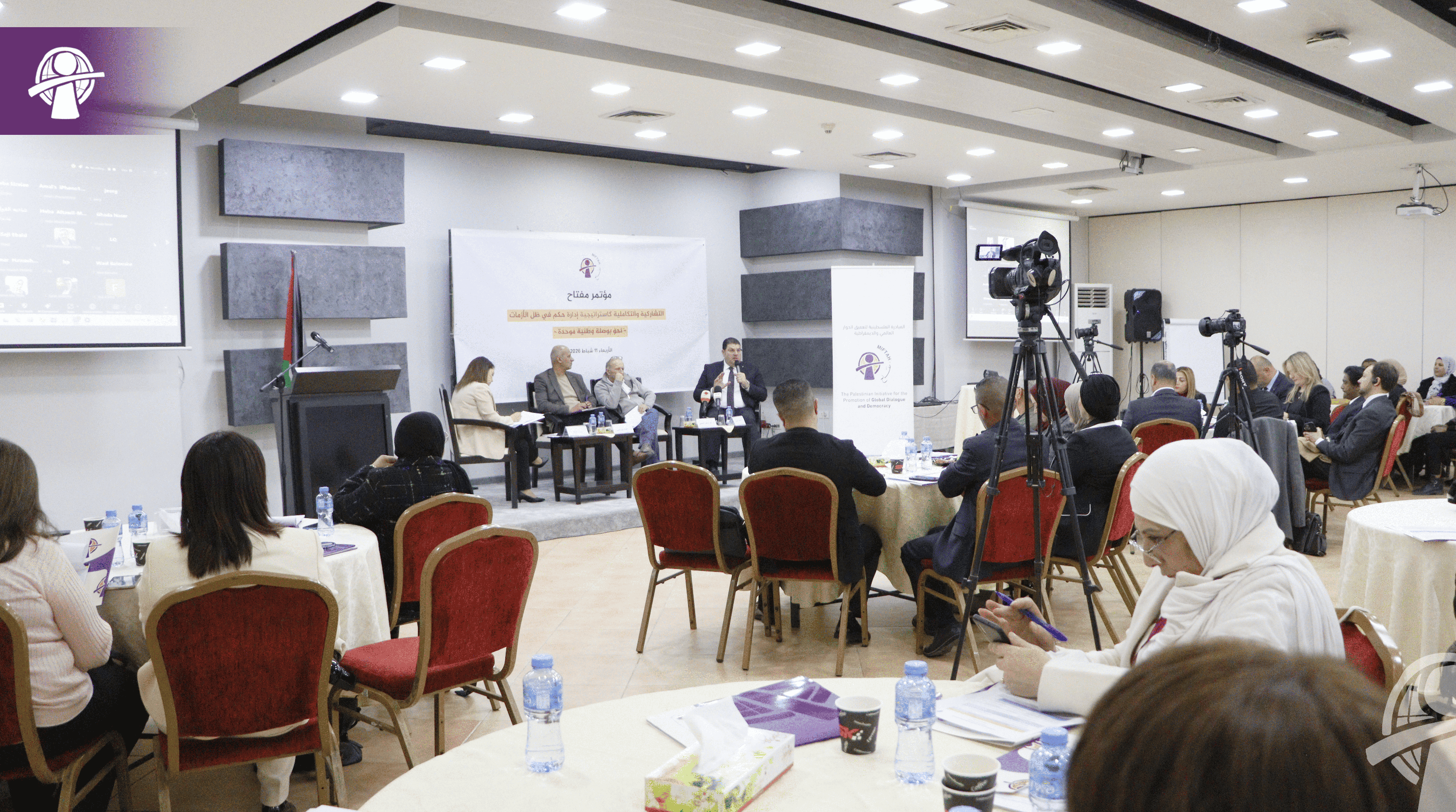
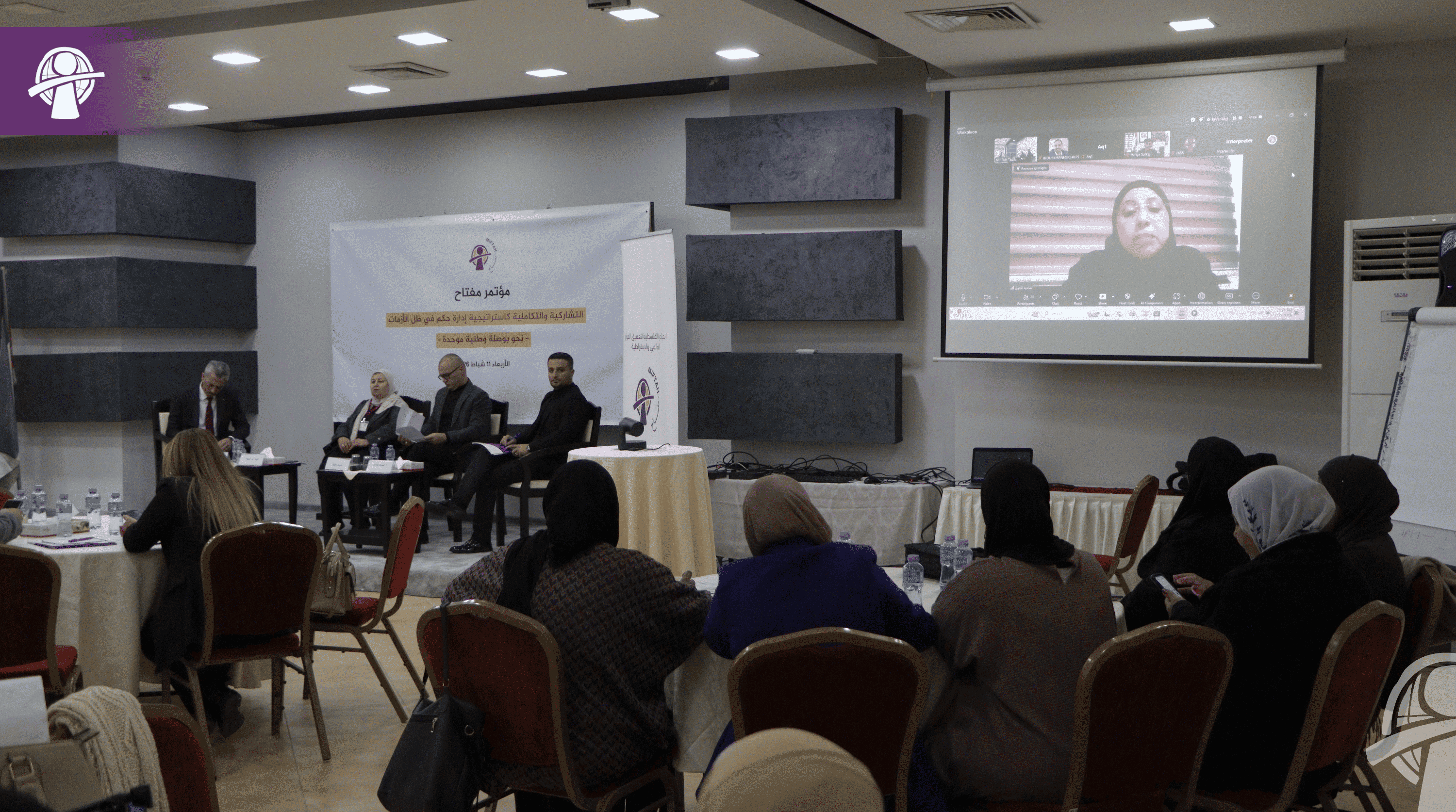
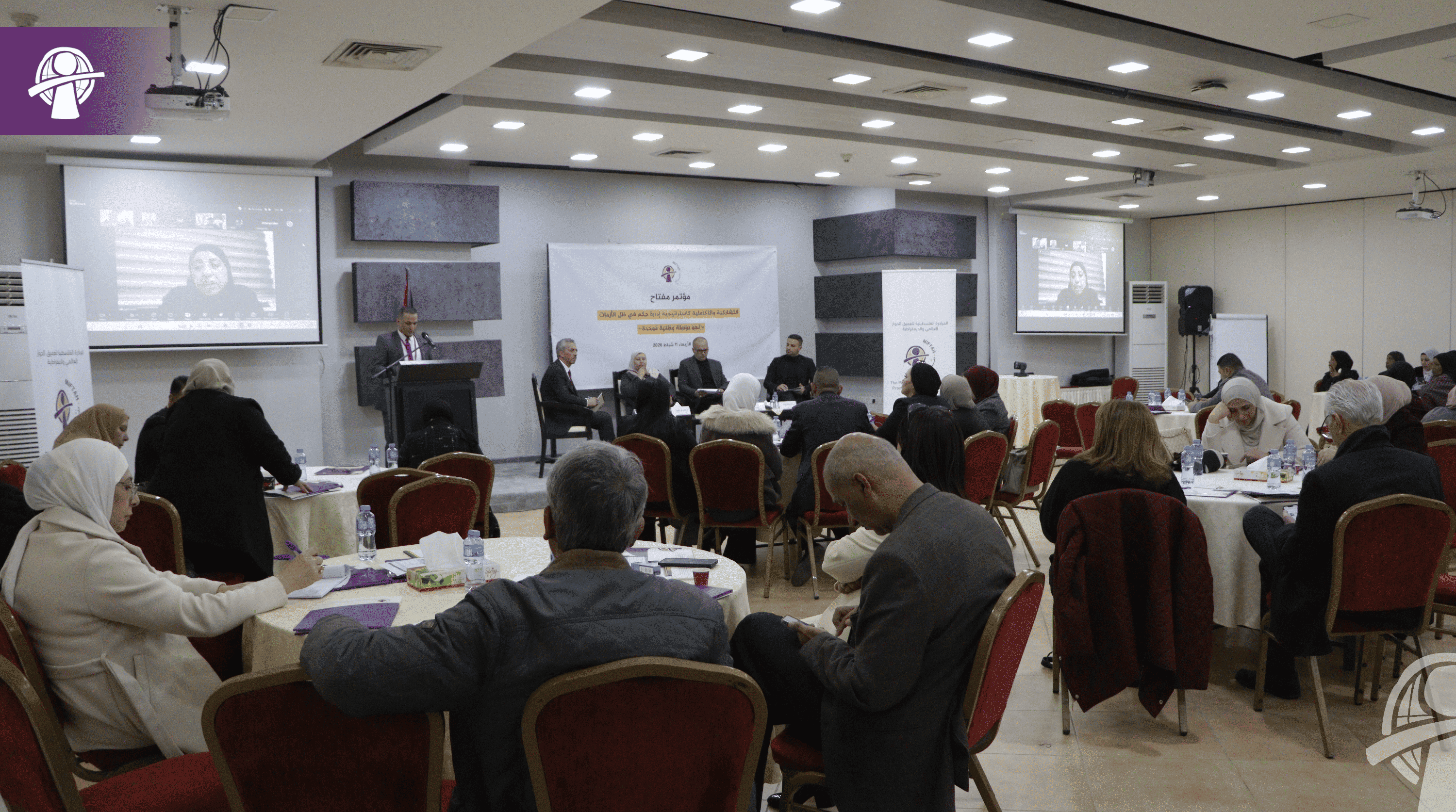
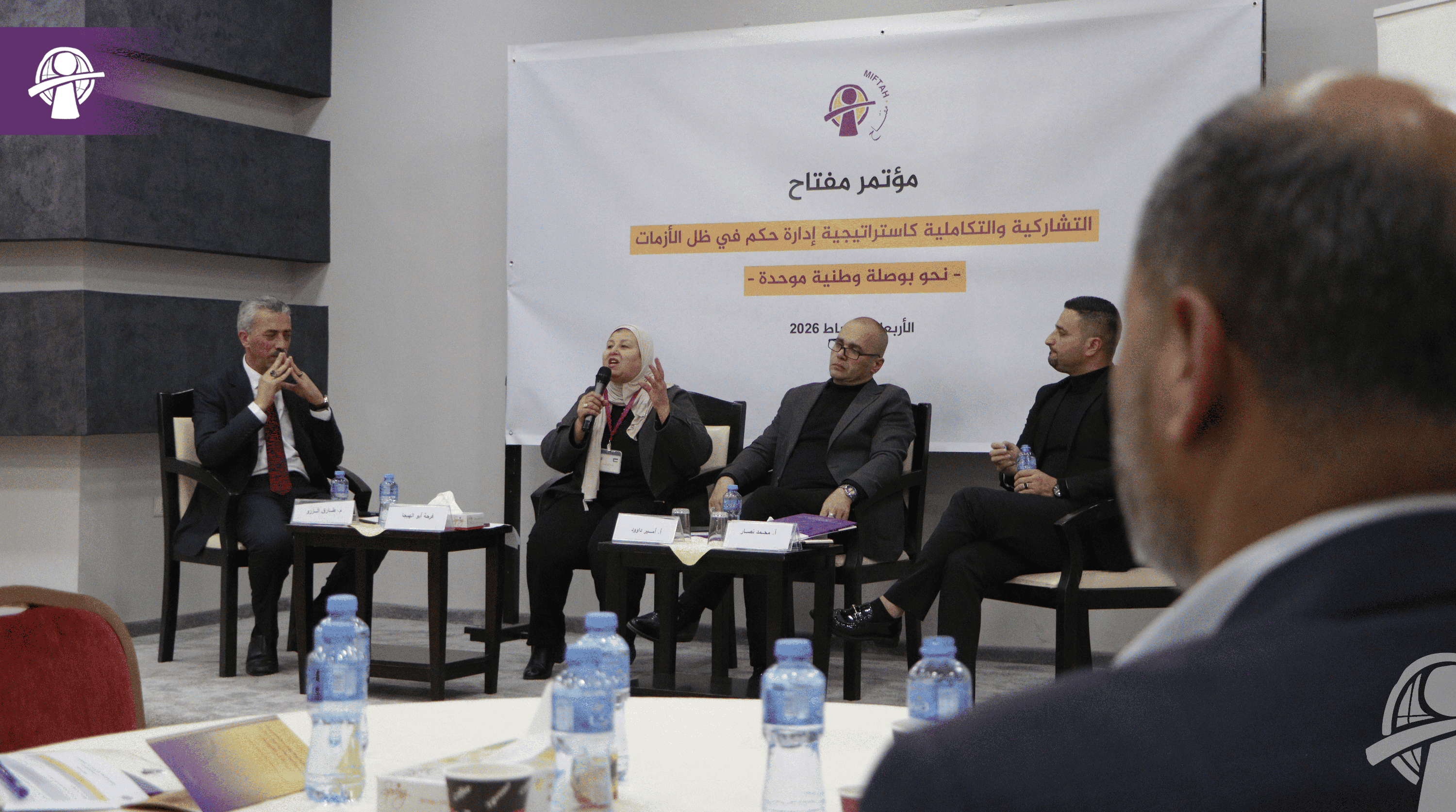
Ramallah – On February 11, MIFTAH held a conference entitled, “Participation and Complementarity as a Strategy of Governance amid crises”, in Ramallah and simultaneously, in Gaza, via Zoom. The conference was attended by a wide spectrum of government representatives, local councils, civil society institutions, popular committees, researchers and academics, in addition to representatives from international institutions. The conference addressed how the Palestinian people’s existence is being targeted along with their ability to survive and remain steadfast amid the genocide in the Gaza Strip, escalating settlement policies and forced displacement from the West Bank, including Jerusalem. It showed how these complex crises exposed the diminishing effectiveness of the Palestinian institutional structure, the limitations of a centralized model of governance and its inability to singularly respond to the needs of society and protect the social fabric. The participants reiterated that participation and complementarity between the government, civil society, local councils and popular committees is no longer an administrative option or a procedural improvement, but a national and structural necessity to ensure steadfastness and the ability to manage crises, and preserve social unity and Palestinian geographic integrity in the face of the escalating colonialist onslaught. They indicated that the absence of the Palestinian Legislative Council (PLC) prompted CSO’s to reconsider public policies and contribute to the development of perspectives on governance, provide practical alternatives that promote national unity and reorganize the relationship between the state and society on the basis of participation and complementarity. The participants reiterated that experience in the field in the West Bank and Gaza Strip proved that local councils, popular committees and grassroots organizations, played a pivotal role in protecting citizens and providing basic services during times of government capacity collapse. They stressed that ignoring these roles or administratively confining them exacerbated fragility rather than hindering it. MIFTAH Executive Director, Dr. Tahreer Al Araj, gave the opening address, maintaining that, “What our people are enduring is no longer a temporary emergency awaiting an end, but a prolonged condition –left alone with no actual administration – and which has repercussions on people’s everyday lives.” She maintained that ‘this stage exposed the magnitude of the crime committed against us, but at the same time has exposed the structural fissures and the limitations of this model of governance, when it is centralized or when it manages crises based on the mentality of “putting out fires”, not one of protection, planning and sustainability”. Al Araj added that, “When governance is based on participation and complementarity between roles, society becomes more capable of enduring and living. We saw this in the refugees camps, in marginalized villages and in cities, besieged by policies and decisions. Popular committees, municipalities, grassroots initiatives, youth and women’s organizations thus constituted the front line of defense of society, not as an alternative to anyone, but as an integral part of a system of governance in times of crisis. Dr. Azmi Shuabi, member of MIFTAH’s Board of Directors, also proposed MIFTAH’s concept of adopting the principle of participation and complementarity in governance as a public policy and a unifying national framework for this stage. He said this was based on certain pillars, including: unity of the system of references, whereby there is official and civic partnership on the basis of complementarity not replacement, and a distribution of responsibilities according to ability, endurance and justice. Shuaibi reiterated that in light of settler encroachment and threats of eviction, expansion and attacks, protection becomes a function of governance and not merely a slogan. It requires systems of civil response, legal support, documentation, early warning, psychosocial support, service protection lines and emergency interventions that prevent areas from being vacated. Shuaibi said it was imperative that preventing expulsion and displacement become an operational government priority, through the provision of planning, resources, services and institutional presence. The first session, moderated by Maram Zaatara, MIFTAH’s Good Governance Program Director, focused on how participation and complementarity can be translated into government policy. Dr. Mohammed Al Ahmad, Chairman of the Permanent Reform Committee, spoke on the Government’s vision for adopting a complementary- participatory policy with civil society, while Dr. Abdel Rahman Tamimi, strategic planning expert, spoke about civil society’s vision of participation and complementarity and their mechanisms from the perspective of a broader civil society. Meanwhile, Issam Haj Hussein, AMAN Executive Director, addressed the issue of accountability as a tool for promoting participation and complementarity, while PNGO Director, Amjad Shawa outlined what was required from the National Technocrat Committee and the government in the next phase, to protect the role of CSOs in the current situation. The second session, moderated by Shadia Al Ghoul, Head of MIFTAH’s Gaza office, discussed ways to preserve a unified national framework in light of these crises, and concerns over a fragmented collective entity. General Manager of Documentation at the Wall and Settlement Resistance Commission Amir Daoud, discussed the commission’s vision in this context, while Gaza City Mayor Yehya Sarraj, spoke about local bodies operating under a genocide and the Gaza municipality model. Tareq Zaru, Head of the Coordinating Council of the Professional Associations Complex, and Mohammad Nassar, Director of the Private Sector Coordination Council, spoke about the vision of the private sector. Furthermore Farha Abu Al Heija , Head of “Not to Forget Association” in Jenin Refugee’s camp, spoke on the role of popular committees in refugee camps during times of crises, with the Jenin camp as a model. This was followed by MIFTAH Public Policies Officer, Uhoud Mraqtan, who presented the recommendations and closing statement of the conference. Adopting participation and complementarity as a National Government Policy The conference closed with a number of general agreements, calling for adopting the principle of “participatory and complementary governance” as a public policy for this phase: a unified national framework. The conference reiterated the institutional and legislative structural unity between the West Bank and Gaza Strip as a fundamental and legal reference, and the rejection of any permanent formula of fragmentation. It called for the adoption of official-civil partnership in planning emergency priorities and ensuring services and societal oversight, while respecting roles and not replacing them. The conference called for considering social protection and preventing expulsion as a central government function, managed at the official/civil level and according to a clear rights-based logic. It called for establishing permanent national red lines, the right to self-determination and statehood, the right to protection of society, refusal to depoliticize the cause and rejection of any arrangements that cancel out or fragment national representation, while strengthening international solidarity on this basis. Reinforcing the role of local players in crisis management The conference called for recognizing the pivotal role of local councils, especially in emergency contexts, and building on the experiences of the Gaza Municipality and popular committees in the Jenin Camp as two national models that can be evaluated, developed and circulated. It also called for developing a legal and institutional framework for popular committees in the camps that guarantee the sustainability of their role as legitimate social structures, especially in light of the challenges faced by the refugee cause. The participants stressed on the need to move from impromptu responses to sustainable and participatory crisis management, based on planning, resource integration and linking social interventions with fair and transparent spending plans. Accountability and societal trust Promoting the mechanisms of societal accountability as a complementary element of participation, ensures justice in the distribution of resources, protects civil action from politicization and polarization and contributes to rebuilding trust between society and institutions of governance. The conference closed by emphasizing that confronting the escalating colonialist onslaught cannot be achieved through closed, centralized instruments or top-down approaches. Instead, it requires a model of national governance grounded in participation and complementarity. This model should be based on mutual recognition of roles and the revival of social structures. It must operate within a unifying national framework that protects the unity of society and geography and promotes Palestinian steadfastness. At the close of the conference, MIFTAH reiterated its commitment to continuing this discussion and building on the conference’s outcomes. It will work to transform these outcomes into sustainable policy and dialogue pathways. These efforts aim to push the Palestinian government to adopt a policy of participation and complementarity in governance. They also seek to lay the groundwork for a model of local governance that reflects the will of society and protects its unity, at one of the most dangerous and complex stages in contemporary Palestinian history.
http://www.miftah.org |