
|
×
FactSheet - The Jordan Valley
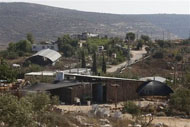
Jordan Valley covers around 28.5% of the West Bank and is rich in land and water resources, making it conducive for agriculture and animal husbandry. Even though there are 56,000 Palestinians and about 9,400 Israeli settlers living in the area, only around 5% of the Jordan Valley is under full or civilian Palestinian control. The rest, 95% of the Valley is designated Area C, which under the Oslo agreement is under full Israeli control. What this means is that agricultural and grazing land is not accessible to Palestinians, the result of which is that 60% of the Palestinians in the Jordan Valley live under the poverty line (2009). While the 9,400 Israeli settlers in the Jordan Valley cultivate 33,000 dunams of land with intense government assistance and turn in around $133 million in revenue, 98.3% of Palestinian farmers have lost production capacity due to Israeli restrictions in the Jordan Valley. Further, limited access to Area C (most of which is in the Jordan Valley) costs the Palestinian economy around $480 million per year and is responsible for the unemployment of 110,000 Palestinians. Expansion of Jewish Settlements and demolition of Palestinian villages The Jordan Valley fell in the hands of Israel as a result of the 1967 war. After its occupation in 1967 for “security” reasons, providing an eastern security buffer zone, Israel started encouraging young couples to off-start agricultural and tourism industries in the area. In the process of doing so illegally under international law, it also evicted around 70,000 – 300,000 Palestinians to other areas in the West Bank to make way for the agricultural settlers. Despite its significance for Palestinians who would depend on the Jordan Valley for its land and water resources, as well as access to the wider world though Jordan, if a Palestinian state is to come into effect, Israel would take control of much of the land and consider it “priority area” as a result of which Israeli settlements are entitled to government subsidies. When the first settlement in the Jordan Valley – Mehola - was constructed in 1968, it was to implement the “Alon” plan which aimed at altering the Arab – Jewish demographic dynamics by encouraging Jewish settlements in sparsely populated Palestinian areas. Currently, there are around 36 settlements and outposts with a population of 9,400 settlers. As part of the incentives to encourage people to move to these “priority areas”, settlers in the Jordan Valley are offered 70 dunams of land, have extended tax breaks, receive housing subsidies and mortgage plans, and get discount on water, electricity and other utilities. While this is the life of Israeli settlers in the Jordan Valley, thousands of Palestinians of the Jordan valley live in a dire situation. Those who live in Area C of the Jordan Valley – which covers 95% of the Jordan Valley are unable to cultivate their land, drill wells, build permanent structures including health centers and schools, do not have access to water or electricity and are under constant threat of being evicted from their land. 90% of all demolitions in the occupied West Bank were in the Jordan Valley (2012). Data from Save the Children in 2009 indicated that 31 of the surveyed households in the Jordan Valley had been temporarily or permanently displaced at least once since 2000 as a result of Israeli military orders and house demolitions. According to UNRWA, 2,033 of the 4,175 Palestinians who were displaced in 2011 were children. While Israel demolishes houses and structures “built without a permit”, it refuses to issue permits to Palestinians who apply for them. From 2000 – 2007, only six percent of permit applications were granted. During the same period, Israel demolished 1,663 Palestinian structures including schools and clinics in the Jordan Valley have been demolished. Water The Jordan Valley has the richest water resources in the whole of the West Bank. Though the Dead Sea, Jordan River and other springs would have provided sufficient water for Palestinians in the Jordan Valley and other parts of the West Bank, Israel controls most of the water resources in the area and Palestinians in the Jordan Valley, especially those in Area C of the Valley suffer from water inaccessibility. From 1967 onwards, Palestinians are only allowed 40% of the water in the Eastern Water Basin in which the Jordan Valley is situated, and they do not get any water from the Jordan River from which they demand 200 million m3.. Further, Israeli, Syrian and Jordanian water installations have reduced the water flow of the Jordan River by 98% compared to its potential in the 40s. The water level in the Dead Sea is also dropping by one meter a year. The 44million m3 of water/year Israel allocates to its Jordan Valley and Northern Dead settlers of about 9,400 is one-third of the total amount of water that is accessible to the 2.5 million Palestinians in the West Bank. While settlements consume 487 liters/person/day, most Palestinians in the Jordan Valley get 40% less than the WHO recommended minimum of 100 liters/day. This figure is alarmingly small in some Bedouin communities in the area which get less than 20 liters/day which is only comparable to the water situation in disaster areas such as refugee camps in Darfur and Haiti after the earthquake. Since 1967, Israel has strictly prevented drilling of Palestinian wells and has destroyed 140 Palestinian water pumps while confiscating another 162 agricultural water projects. As a result, only 37% of Palestinians in the Jordan Valley are connected to water while the rest need to buy their water in tanks from an Israeli water company, Mekerot. They have to buy their water in tanks that cost from 14 – 37.5NIS/m3 while the normal price for water from a water network runs at 2.6 NIS/m3. This has resulted in some households spending around 40% of their income on water. The Bedouins Most affected by the Israeli policy of segregation, deprivation and limit on freedom of movement are the Bedouins of the Jordan Valley who number around 15,000. The Bedouins are mostly cattle herders and semi cattle herders who move from place to place looking for pasture and water for their herd. The abundance of such resources in the Jordan Valley made it an attractive place for them to reside. Most are refugees from the 1948 war from what is now southern Israel. Before being displaced to the Jordan Valley, some of these communities had settled in southern Hebron hills, in the West Bank, from which they were displaced for “security reasons” following the 1967 war. Since most of these people are refugees and don’t have deeds to the land they live on, they are under constant threat of being evicted. Most live in Area C of the Valley where they are not allowed to build permanent structures including homes and schools. As a result they live in tents and tent like structures herding their cattle in very limited plots of land that are accessible to them. Most of the Bedouins in the Jordan Valley live without infrastructure and services such as water, electricity, transportation, health services etc. They are the ones who suffer the most from water scarcity in the area due to their low income and demand for grazing land and water for their herds. Because they cannot drill water wells and the Israeli agricultural settlements take water away from the available natural springs they counted on for years, they don’t have water for most of the year and have to buy it. They buy their water in tanks from an Israeli company at a rate of 20-38 NIS/cubic meter and bring it in a tractor. Due to the expenses as well as the limited access involved in getting water, most villages have only 30-36 liters of water per person per day. This is 30% less than what is recommended but the World Health Organization. Lack of access to land and water being the primary reasons, 79% of the Bedouins in Area C are food insecure. 93% of the children consume less than the recommended number of meals, 15% are underweight and nearly one third have stunted growth. Such severe economic situation and lack of educational facilities has forced Palestinians even children to seek employment in Israeli settlements. Agriculture and unemployment What makes settlements in the Jordan Valley different from settlements elsewhere in the West Bank is that they are mostly agricultural or economic related. Most of the settlers own farms or related factories and are there for economic incentives the place and the Israeli government offer rather than for Ideological reasons. Even though the Jordan Valley constitutes much of the agricultural wealth of Palestinians, 60,000 dunams of agricultural land is unavailable to Palestinians in the Jordan Valley. 42% of the Jordan Valley Palestinian population depends on agriculture or animal husbandry. However, Israeli control over land and water has severely limited the production capacity of the Palestinian economy and has led to food insufficiency in the Jordan Valley. Many farmers in the Jordan Valley now rely on weather conditions and risk high loss during dry seasons while Israeli settlers enjoy a sustainable water supply and have over 13 times more irrigated land. According to the World Bank, better access to water can improve Palestinian agricultural revenue by 10%. . Further, about 98.3% of Palestinian farmers in the area have lost their production capacity due to Israeli restrictions including restrictions on movement. Since 2006, Israel has placed 17 roadblocks and checkpoints in the Jordan Valley area, limiting access only to those who reside in the area. The checkpoints also limit the Palestinian agricultural produce that can reach Palestinian markets and add costs to transporting Palestinian goods to Israeli or Palestinian markets. Considering the nature of the goods (agricultural), delays in the checkpoints and back-to back operations where goods are moved from one truck to another affects the quality and amount that can finally reach its destination. Currently, agriculture in the Jordan Valley contributes 15% to the formal work force of the West Bank. Unable to farm or raise their own cattle, and out of other economic options, about 10,000 – 20,000 Palestinians work in agricultural settlements in the Jordan Valley. Even if civilian Israeli law is applicable in Israeli settlements in the occupied West Bank, it’s not enforced when it comes to Palestinian laborers in these settlements. Often times, Palestinian workers are not paid the Israeli minimum wage and are not formally registered hence do not benefit from Israeli labor laws or rights. The daily wage for Palestinians runs as low as 60-100 NIS/day, which is two or three times less than the daily wage in Israel proper, while Thai and other foreign laborers receive the standard Israeli wage of around 200 – 250 NIS and are entitled to Israeli labor rights and benefits. Moreover, about 5.5% of the Palestinian workers in the farms are children as young as 13 years old. The Palestinian children who work in these agricultural settlements work in secret and are not formally registered hence are not insured and their work environment may not comply with international or Israeli health and safety regulations. For the eight hour work they do usually from 6am – 2pm, they get about 40-60 NIS/day. But for most of these children, going to school is not a viable option due to the expenses, distance, hassle (checkpoints) and lack of facilities (school infrastructure, lack of teachers), that are associated with it. In addition, most carry the burden of supporting their families who are in dire economic circumstances. Employing child labor is prohibited not only in international labor law but is also illegal under Israeli law. But the greater crime is probably the poverty under which these children live and which has forced them to work instead of going to school. As the occupying entity, Israel is fully responsible for ensuring the well being of the population it occupies and for enforcing international human rights and relevant treaties. Sources:
Maan Development Center:
B’tselem:
×
FactSheet - Palestinian Prisoners
Since Israel began its illegal occupation of the West Bank and Gaza in 1967, more than 750,000 Palestinians have been detained, representing approximately 20 percent of the current total Palestinian population in the Occupied Territories. Throughout the decades of this persisting conflict , Israel has illegally detained Palestinian men, women and children through an extensive and systematic set of regulations that control every aspect of Palestinian life, which restrict or deny their basic human rights. Moreover, the conditions of the prisons and treatment of prisoners are horrendous, violating numerous international as well as Israeli laws. The Israeli military, which governs the Occupied Territories, constantly changes or issues new military orders, which are often unknown to local populations until implemented. Palestinian prisoners are then subject to Israeli military tribunals, which rarely follow required international standards of fair trial. Thus, Palestinians not only live under an illegal occupation, but also under an unstable and unjust system of law and order. Why is the prisoner issue important? The Palestinian prisoner issue has been a major point in peace negotiations between Israel and the Palestinians for decades; it is a key, yet controversial, issue in final status negotiations. Israel has illegally detained thousands of Palestinians from all walks of life, continuously denying them their inalienable and fundamental rights. Palestinians claim there will be no peace in the region until Israel addresses its numerous legal and human rights violations against Palestinian political prisoners and ultimately releases them all. Israel, on the other hand, continues to arrest innocent – mostly politically active – Palestinians. The vast majority of the detainees are political prisoners arrested for political expression or no legitimate security reason. This practice contradicts international covenants that protect freedom of speech for all people, especially political dissidents. The Israeli human rights group B’Tselem commented on Israel’s questionable detention procedures in the name of ‘security’: “ Security is interpreted in an extremely broad manner such that non-violent speech and political activity are considered dangerous … [ t his] is a blatant contradiction of the right to freedom of speech and freedom of opinion guaranteed under international law. If these same standards were applied inside Israel, half of the Likud party would be in administrative detention.” Administrative detention is the practice of imprisonment without trial or the continuation of imprisonment after the completion of a sentence. According to Israeli law, specifically Military Order Number 1229 (1988) , administrative detention is legal in the Occupied Territories, empowering military commanders to hold an individual in custody for up to six months if there is “reasonable grounds to presume that the security of the area or public security require the detention.” Israel routinely renews these detention orders without limitation; thus, Israel may hold Palestinians without charge or trial indefinitely. Furthermore, the military judges who deal with cases involving administrative detention make their decisions based on confidential material, which is not provided to the detainee or his attorney. Hearings also take place behind closed doors. To view the full Fact Sheet as PDF(100 KB)
×
FactSheet - House Demolitions
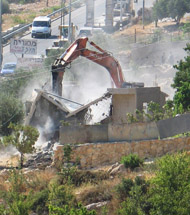
On June 10th 1967, the Israeli government demolished the Moroccan Quarter in the Old City of East Jerusalem to make easier public access to the Western Wall. After the Israeli army called on the inhabitants of the quarter to vacate their homes only a couple of hours before the demolitions took place, a call which was not heard by everybody in the quarter, 135 houses were demolished along with two mosques and other sites. 650 inhabitants were left homeless and several others dead under the rubble of their homes. This demolition was not the first of its kind in the Occupied Palestinian Territories but definitely the starting point to a lifetime struggle with illegal house demolitions by the Israel Occupying forces. Since 1967, almost 18,000 homes have been demolished in the occupied Palestinian territories for three main reasons: collective punishment and for so-called operational and administrative reasons. House demolitions started before 1967 by the British Mandate as a means to expel the Palestinians from their homes. Below is a brief history of house demolitions in Palestine:
Pretexts under which house demolitions are carried out:
Collective Punishment: Before the policy of collective punishment by means of house demolitions was renewed during the second (Al Aqsa) Intifada, demolitions were only carried out after a military order was issued. Under Israeli law the demolition order is delivered to the family and the family is allowed to appeal to the military commander within 48 hours. Even if the appeal is denied, the family must be allowed to petition the High Court before the house is demolished. In reality, however this is not the case at all. During the current Intifada, Israel treated house demolitions as an imperative military action whereby most of the house demolitions took place at night, without any prior notice or demolition order.
Military Operations:
Administrative policies:
Israeli forces are still demolishing houses in large numbers under false pretenses and justifications to serve the overall purpose of the Zionist state to uproot and drive as many Palestinians out of their houses and lands as possible and to build more illegal settlements. According to B'Tselem's recent statistics, in the last two years (2006-2007) in the West Bank alone 165 houses were demolished leaving 724 people homeless, and between 2004-2007 in east Jerusalem alone 300 houses were demolished leaving 939 Palestinians homeless. House demolitions have a severe impact on the Palestinian people, affecting the economy and agriculture and causing severe trauma to children, women and men who fall victim to this war crime.
Resources:
×
FactSheet - Settlements: An Obstacle to Peace
Introduction On June 4th, 2009 United States President Barack Obama outlined his administration’s policy regarding Israeli settlements in occupied Palestine. According to Mr. Obama: “Israelis must acknowledge that just as Israel's right to exist cannot be denied, neither can Palestine's. The United States does not accept the legitimacy of continued Israeli settlements. This construction violates previous agreements and undermines efforts to achieve peace. It is time for these settlements to stop.” Israel almost immediately began colonizing the West Bank and Gaza Strip after their occupation following the 1967 War. Israeli settlers started creating “Jewish only” residential areas that were heavily defended by the Israeli army. Since their conception settlements and their population have continued to grow and expand across the territories, while annexing major parts of the West Bank (Israel “withdrew” from the Gaza Strip in 2005). All settlements are under control of the Israeli government and their military administration. A viable Palestinian state is impossible to create without a full dismantlement of settlements and their population from the West Bank to the pre-1967 borders. International Law Israeli settlements in the West Bank are a clear violation of international law under both The Fourth Geneva Convention and The Hague Regulations. Article 49 of the Geneva Convention prohibits occupying powers to transfer citizens of their own state into occupied territory-while The Hague Regulations prohibit an occupying power to make any changes in the land of an occupied territory unless they are for military purposes and the benefit of the local population. B’tselem best describes how Israeli settlements violate both protocols of International Law. According to their website, “The establishment of settlements results in the violation of the rights of Palestinians as enshrined in international human rights law. Among other violations, the settlements infringe the right to self-determination, equality, property, an adequate standard of living, and freedom of movement. The illegality of the settlements under international humanitarian law does not affect the status of the settlers. The settlers constitute a civilian population by any standard, and include children, who are entitled to special protection. Although some of the settlers are part of the security forces, this fact has absolutely no bearing on the status of the other residents of the settlements.” Numerous international organizations and bodies have termed the settlements illegal, and call upon Israel to halt all settlement building. Such organizations include the United Nations, the International Court of Justice, the European Union, Amnesty International, and Human Rights Watch. Resolutions have been passed by the United Nations Security Council condemning Israel for settlements, including UN resolutions 446, 452, 465, 471 and 476. All claim Israeli settlements to have no legality and unanimously terming them all illegal under international law. Immediately after Israel’s capture of the West Bank and Gaza Strip the United Nations Security Council called for Israel to withdraw from the territories. Condemning Israel’s actions the Security Council passed UN Resolution 242. It was adopted calling on a “withdrawal of Israeli armed forces from territories occupied in the recent conflict.” Israel has ignored the resolution and continues a military occupation in the West Bank, while keeping the Gaza Strip an open air prison while continuing settlement expansion under occupation. Facts and Statistics Settlements: There are currently 121 official settlements in the West Bank and Gaza and 12 built on land annexed to Jerusalem. This is in addition to 100-plus unofficial outposts and thousands of acres of Palestinian land that is secured for this construction. According to the Israeli Central Bureau of Statistics (ICBS), in September 2009, the number of settlers living in the West Bank had reached 310,200. It was estimated that at the end of 2008 almost 194,000 persons were living in Jewish neighborhoods built on land annexed to Jerusalem. The total settler population amounts to 6.5 percent of Israel’s population (for more information, see B'tselem Annual Report, 2009) By 2008, the settler population (excluding east Jerusalem) had grown at a much faster rate than the general population: 4.7 percent compared to 1.6 percent respectively. In 2007, the population of the settlements (excluding east Jerusalem) grew faster than Israel’s general population: 4.5 percent compared to 1.5 percent. Some 40 percent of the settlements’ population growth was comprised of Jews emigrating from Israel and abroad. According to the Palestinian Central Bureau of Statistics, at the close of 2009 the number of settlers in the West Bank reached 517,774, with over half of these living in the Jerusalem Governorate. Their report also shows that the number of settlers who live in Israeli settlements in Palestine increased by more than 40 times during the period 1972-2009. Despite the illegality of the settlements, and construction has been continuing at a high rate. In 2009, there were 1,703 housing starts in West Bank settlements (ICBS). This number compares to 1,518 starts in 2006, 1,471 starts during 2007, and 2,107 starts in 2008, during which construction was expedited in the wake of the November 2007 Annapolis conference. Construction on 2,077 housing units was completed in 2009. ICBS also reported that as of December 2009, soon after the construction moratorium went into effect, a total of 2,778 housing units were in various stages of construction in West Bank settlements (for more information see http://www.fmep.org/reports/archive/vol.-20/no.-3/settlement-timeline). Unrecognized settlements, referred to in the media as “outposts” also exist. It is impossible to pinpoint an exact number on “outposts” but estimates showcase the number at around 100 and higher. Such settlements are usually very small scale and their numbers change constantly. While they are illegal under Israeli law, the government continues to fund their construction and not a single outpost was evacuated in 2009. Update: On November 25, 2009, the Government of Israel announced a building freeze on settlement construction and planning. The ten month moratorium on Israeli settlements ended in September 2010. The construction rate in the following year, however has allowed the settlers to close the gap created by the building freeze. The trend of the fast growing number of settlements continues into 2011, as statistics show that the construction rate of illegal settlements in the West Bank is nearly double the construction rate inside Israel (Peace Now, September 2011).When the ten month long building freeze ended in September 2010, work began on 2,598 new settlement units in the West Bank. Further, the construction of 3,700 housing units continued throughout the moratorium, on the grounds that the construction had started before November 2009. Since the end of the building freeze, the construction of 2,149 housing units have been completed (Peace Now, September 2011). East Jerusalem One of the most contentious issues debilitating the peace process is that of east Jerusalem. Under international law, east Jerusalem is occupied territory, which means that Israel has no right to it by virtue of having taken control of it militarily, and its operations in that area violate the Fourth Geneva Convention, as well as the International Covenant on Economic, Social and Cultural Rights, and the International Convention for the Elimination of all forms of Racial Discrimination (Palestinian Academic Society for the Study of International Affairs). Israel has been called upon continually to adhere to international law but without effect: The 2003 Road Map for Peace stipulated that Israel was to end all settlement expansion, and the Middle East Quartet reiterated the importance of that requirement in 2009, when it condemned ongoing plans to expand settlements in east Jerusalem. The Quartet stipulated that Israel must freeze all activity "including natural growth", dismantle outposts erected since March 2001, and "refrain from demolitions and evictions in east Jerusalem"[The Guardian, Friday 19 March 2010]. Nevertheless, Israel has pursued a steady strategy of attempting to drive Palestinians out and incentivize Jewish settlement in that area. Since Israel captured the city in 1967, nearly 200,000 Jews have moved to east Jerusalem. In 2010, Israel declared plans to build 1,600 new homes in the area. Peace Now reports that this brings the numbers to over 8,000 proposed homes in east Jerusalem. In May, 2010 construction began on 14 housing units in Ras al-Amud, a neighborhood comprising 14,000 Palestinians [Haaretz, May 9, 2010]. “If you look at 2009 and 2010, you understand what the trend is here. The trend is massive expansion," said Arieh King, who runs a group that buys land for Jews in east Jerusalem and other areas. He said his organization's goal is to create "Jewish continuity" from Jerusalem to settlements in the West Bank, making it harder to eventually disconnect the two [AP, May 20, 2010]. The Inter Press Service reported that “Israeli Interior Minister Eli Yishai announced that Israel would never stop construction in east Jerusalem, the section of the city that Palestinians want for the capital of their hoped-for future state” [IPS, May 14, 2010] Israel’s announcement of settlement expansion in East Jerusalem occurred during a visit of the United States’ Vice President Joe Biden in March, 2010. Biden released the following statement: I condemn the decision by the government of Israel to advance planning for new housing units in East Jerusalem. The substance and timing of the announcement, particularly with the launching of proximity talks, is precisely the kind of step that undermines the trust we need right now and runs counter to the constructive discussions that I’ve had here in Israel. We must build an atmosphere to support negotiations, not complicate them. Settler Violence Settler violence is a daily occurrence against Palestinians. The majority of settler households harbor weapons and constantly harass local Palestinians by stealing privately owned land, uprooting olive trees, shooting Palestinians, and disrupting agricultural growth for Palestinian farmers. Numerous international groups have condemned violence against Palestinians by the minority settler population but their complaints have largely fallen on deaf ears. The case of Hebron Hebron is a city notorious for settler violence. Hebron claimed 42% of the 290 recorded settler violence incidents in 2008 across the West Bank. A minority of Israeli settlers established residency in the city center amongst a Palestinian population. According to the Temporary International Presence in the City of Hebron (TIPH) there are approximately 500 Israeli settlers living in Hebron, with an additional 7,000 living in settlement suburbs. Meanwhile the city of Hebron is home to around 170,000 Palestinians. Israeli settlers in Hebron are particularly hostile, forcefully taking over Palestinian houses in the city in a bid to uproot the local population. Outbreaks of violence are a regular occurrence in the fragile city. According to TIPH: “In April 2002 IDF took full control of the entire city. Permanent watchtowers were constructed in area H1 in 2005. Since then the Israeli army operates over the entire area in violation of the agreements. More than 100 roadblocks, fences, walls and checkpoints are put up in the city center around the settlements and the access roads to them. This separates the Jewish settlers and the Palestinian residents. Furthermore it severely hampers the freedom of movement. Due to the restrictions and violence surrounding the settlements as well as prolonged curfews, large areas of the old city are deserted. Several main shopping streets are closed by military order.” The economic impact settlements are creating on the Hebron Palestinian community is severe. Israeli Human rights groups have recorded the difficult living situations working against Palestinians. B’Tselem and the Association for Civil Rights in Israel found in late 2006 that more than 40% of Palestinian apartments in the City Center had been vacated and over 75% of Palestinian businesses had closed due to difficult living conditions caused by settler harassment and restrictive Israeli army policies.
×
Factsheet - Israeli Settlements (Updated)
Introduction In 1947 the United Nations General Assembly passed Resolution 181 calling for the partition of British-ruled Palestine Mandate, in which 56.47% of the country would become a Jewish state and 43.53% an Arab state. However, at the time only 7% of the land was owned by Jews comprising one-third of the country. The Palestinian rejection of this plan led to the 1948 Arab-Israeli War, which caused two-thirds of Palestinians to be displaced. Israel subsequently conquered 78% of the country. Since 1967 Israel has occupied the remaining Palestinian lands (West Bank and Gaza), establishing and significantly expanding settlements both in area and population through political, organizational and economic support. The Israeli government's policy since then has aimed to break up the remaining Palestinian populations, isolating them and maintaining a military and civilian presence in the territories in order to make it difficult for Israel to surrender land and prevent the possibility of a Palestinian state. Israel continues to control water, natural and infrastructural resources in the territories. Today Palestinians are negotiating for less than 22% of historical Palestine. Settler Population and Number of Settlements According to a 2004 Foundation for Middle East Peace report, the total settler population in the West Bank and Gaza (including east Jerusalem) is 416,800. There are 224,224 settlers in the West Bank, 185,000 in east Jerusalem and 7,576 in Gaza. The Palestinian population in the Occupied Territories totals 3.8 million: 2.4 in the West Bank and Jerusalem and 1.4 million in Gaza.
×
FactSheet - Israeli Settlements
Since 1967, every Israeli government has significantly expanded settlements, both in area and population, in the Occupied Palestinian territories by provided political, organizational and economic support, and encouraged their continual expansion. In 1977, the Likud party came to power and began vast construction of settlements throughout the West Bank. Settlement activity has continued unceasingly, even under the Labor government of Yitzhak Rabin (1992 – 1996). Settler Population and Number of Settlements According to B’Tselem, there are 380,000 settlers in the West Bank and Jerusalem. (B’Tselem, Land Grab. Draft Report, May 2002). In July 2002, the Israeli Interior Ministry reported that the settler population in the West Bank (excluding east Jerusalem) and Gaza had grown by 10,847 since June 2001 to a total of 218,862, constituting a 5.2% increase (2000: 7.8%), mostly due to ”natural growth.” Jewish settlers comprise less than 8% of the total Israeli-Jewish population. (PASSIA, Settlements Special Bulletin, 2001) Israeli settlers constitute 9-10% of the total West Bank population, and only 0.6% of the Gaza population. (PASSIA, Settlements Special Bulletin, 2001) About 50% of the settlers live in only 8 settlements. (FMEP, Nov.-Dec. 2001) 42% of the West Bank settlers are of Israeli origin, 35% of European/US, 11% of Asian and 12% of African origin. (PALDIS, Ideological Settlement in the West Bank Report, July 2002) The total figure of residential settlement sites in the West Bank is 174, excluding paramilitary and military installations. (PALDIS, Ideological Settlement in the West Bank, Report, July 2002) According to Peace Now there are 145 settlements in the West Bank and Gaza. FMEP counts 157 settlement locations, 130 in the West Bank, 11 in east Jerusalem, and 16 in Gaza. (FMEP Settlement Report, March 2002) Land Confiscated by Israel The West Bank, including east Jerusalem, covers an area of 5,854 km², while Gaza strip covers an area of 365 km². Since the 1967 occupation, Israel has either confiscated or declared as closed areas over 55% of the West Bank and 25% of the Gaza Strip, thereby placing those areas out of Palestinian reach. On 28th of June, 1967, Israel unilaterally expanded the borders of east Jerusalem from 6.5 km² (the boundaries as designated by Jordan) to 70.5 km² to include lands from many West Bank villages while avoiding populated Palestinian areas. Since the signing of the Declaration of Principles in 1993, up till august 2001: more than 70,000 acres of land have been confiscated. The area occupied by the settlements in the West Bank doubled in the seven years between 1992 and 1999 from 77 km² (which represented 1.3% of the West Bank) to 150 km² (which represents 2.6% of the West Bank). International Law The establishment of settlements in the West Bank violates international humanitarian law and international human rights law. The Fourth Geneva Convention expressly prohibits an Occupying Power from deporting or transferring parts of its own civilian population into the territory it occupies. Hague Regulations prohibit the occupying power to undertake permanent changes in the occupied area, unless these are due to military needs in the narrow sense of the term, or unless they are undertaken for the benefit of the local population. In addition, Israeli settlements violate United Nations Security Council Resolutions 452 (1979) calling upon “the Government and people of Israel to cease, on an urgent basis, the establishment, construction and planning of settlements in the Arab territories occupied since 1967, including Jerusalem.” The establishment of the settlements leads to the violation of the rights of the Palestinians as enshrined in international human rights law. Among other violations, the settlements infringe the right to self-determination, equality, property, an adequate standard of living, and freedom of movement. Methods of Land Grabbing Israel has used a complex legal and bureaucratic mechanism to take control of more than fifty percent of the land in the West Bank. The principal tool used to take control of land is to declare it “state land.” This process began in 1979, and is based on a manipulative implementation of the Ottoman Lands Law of 1858, which applied in the area at the time of occupation. Other methods employed by Israel to take control of land include seizure for military needs, declaration of land as "abandoned assets,” and the expropriation of land for public needs. In addition, Israel has assisted private citizens purchasing land on the "free market.” In many cases, Palestinian residents were unaware that their land was registered in the name of the state, and by the time they discovered this fact, it was too late to appeal. The burden of proof always rests with the Palestinian claiming ownership of the land. Even if he meets this burden, the land may still be registered in the name of the state on the grounds that it was transferred to the settlement “in good faith.” Since the establishment of settlements in the Occupied Palestinian Territories is prohibited under international law, the methods used to secure it are also unlawful. The Israeli High Court of Justice has generally sanctioned the mechanism used to take control of land. In so doing, the Court has contributed to imbuing these procedures with a mask of legality. Discrimination A regime of legalized separation and discrimination has been created in the West Bank by Israel. The regime is based on the existence of two separate legal systems in the same territory, with the rights of individuals being determined by their nationality. This regime is the only one of its kind in the world, and is reminiscent of distasteful regimes from the past, such as the Apartheid regime in South Africa. The discrimination against Palestinians is apparent in almost all fields of activity of the occupation authorities, starting from the methods used by Israel to seize control of the land on which the settlements are established, to the separate planning institutions for Palestinians and for Israelis, to the application of Israeli law to the settlers and settlements while the Palestinian population remains subject to the military legislation. Israel uses seized lands to benefit the settlements, while prohibiting the Palestinian public from using them in any way, which is forbidden and illegal under international law. Moreover, Palestinians are forbidden to enter these areas without authorization from the Israeli military commander. Israeli citizens, Jews from throughout the world and tourists are all permitted to enter these areas without the need for special permits. The frequent refusal of Israeli authorities to grant construction permits to Palestinians who wish to build on privately owned land has left the latter with no choice but to take extreme risks in building regardless of the required Israeli approval. Hundreds of Palestinian houses are demolished every year. Over 674 Palestinian homes were demolished and 282,000 trees have been uprooted in the West Bank alone, as a result of Israel’s discriminatory policies. On the other hand, the settlers benefit from all the rights available to Israeli citizens living within the Green Line, and in some cases are even granted additional rights. Moreover, Israeli settlements are given a greater allocation of the superior water resources that typically lie beneath them. According to B’Tselem, an Israeli human rights organization, “the water consumption of the population of the Jewish settlements in the Jordan Valley − a population of less than 5,000 − is equivalent to seventy-five percent of the water consumption of the entire Palestinian population of the West Bank (approximately two million people) for domestic and urban uses.” In the Israeli-Occupied Gaza Strip, among the most densely populated areas in the world, a settler population of approximately 6,500 controls more than 20% of the Gaza Strip’s territory and has full freedom of movement. In order to facilitate freedom of movement for these settlers, the Gaza Strip’s Palestinian population of more than 1,100,000 is subjected to checkpoints, curfews and military invasions. Incentives for Living in Settlements Israel has implemented a consistent and systematic policy intended to encourage Jewish citizens to migrate to the West Bank and Gaza. One of the tools used to this end is to grant financial benefits and incentives to citizens - both directly and through the Jewish local authorities. Government expenditure includes - besides high security costs - low purchase prices, mortgage grants (up to 95% of the cost), Priority ‘A’ categorization (for state-subsidized benefits and incentives such as tax breaks, free schooling and school busing, and business grants). Financial benefits and incentives are provided by six ministries: Housing and Construction Ministry (e.g., loans for the purchase of apartments), Education Ministry (e.g., free pupils’ transportation, incentives for teachers), Industry and Trade Ministry (grants for investors), Labor and Social Affairs Ministry (incentives for social workers), Finance Ministry (income tax reduction), and the Israel Lands Authority - accountable to the Ministry of National Infrastructure – (price reduction in land leasing). (B’Tselem, Land Grab. Draft Report, May 2002). On 5 May 2002, the Knesset approved NIS 30 million for settlement related purposes - NIS 17.5 million for agriculture in the Jordan Valley, NIS 8.5 million in grants to young people settling in the Jordan Valley and the Golan Heights and NIS 3.76 million for beefing up security (Ha’aretz). The Ministry of the Interior provides increased grants for the local authorities in the territories relative to those provided for communities within Israel. In the year 2000, the average per capita grant in the Jewish local councils in the West Bank was approximately sixty-five percent higher than the average per capita grant in local councils inside Israel. The discrepancy in the grants for the regional councils is even greater: the average per capita grant in 2000 in the regional councils on the West Bank was 165 percent of that for a resident of a regional council inside Israel. The “Natural Growth” Loophole Israel has repeatedly sought methods allowing the continued building of settlements, while giving the appearance of restricting settlement construction. Its most successful mechanism is found in its interpretation of “natural growth.” The term “natural growth” was never precisely defined, and the vague nature of the term has allowed Israel to continue to expand the settlements. Since the signing of the Declaration of Principles, in 1993, all Israeli governments have interpreted this phrase as including not only the natural growth of the existing population (i.e., birth rates), but also the growth of the population by migration. Settlement growth is not "natural". Israel's policy encourages settlement in the Occupied Palestinian Territories through extensive and generous government subsidies. The Israeli governments have actively encouraged migration into settlements through various incentives. 60% of Israeli construction in the Occupied Palestinian Territories is state funded, compared to 25% within Israel. Due in large part to financial and other incentives, Israel's rate of population growth in the Occupied Palestinian Territories, which includes birth, immigration, and other factors such as market demand, is approximately 3-4 times greater than within Israel (8-10% as compared to 2-3%. Even if Israel continued to maintain its subsidized natural growth rate, Israel could freeze construction for 2-5 years, and would be required to demolish apartments based on existing units empty and available in the Occupied Palestinian Territories. It is estimated that there are between 10,000 to 20,000 settlement housing units are empty and available. Yet despite the facts above, Israel, under the banner of “natural growth,” has established new settlements under the guise of “new neighborhoods” of existing settlements. To this end, these new settlements have been included in the area of jurisdiction of the adjacent settlement, even in cases of no territorial contiguity between the two settlements. Prime Minister Netanyahu used "natural growth" to increase housing starts by 100% in 1998 to 4,210, the highest numbers since Ariel Sharon was Minister of Housing in 1991-1992. Following in his predecessor's footsteps, Prime Minister Barak approved Netanyahu's plan for 11,000 new apartments and issued tenders for approximately 2,511 housing starts. Cumulatively, as a result of this "natural growth" policy, since 1992 Israel has doubled its settlement population in the West Bank (excluding east Jerusalem) to 200,000 settlers and has confiscated 215,700 dunums (approximately 54,000 acres). Differentiating Between Settlements and Outposts Both settlements and outposts are illegal under international law. However, unlike settlements, many of the outposts are uninhabited and are referred to as “dummy outposts” - empty outposts erected by the settler movement to use as a tool for negotiations or public relations. Outposts are comprised off one or two caravans erected on the site, and if inhabited, tend to only have one family. Outposts are illegal not only under international law, but under Israeli law as well. However, the Israeli government has generally refrained from evicting the settlers or demolishing the buildings they erected without permits. Some received retroactive approval. Peace Now aerial surveys showed that since the Sharon government was established in February 2001, at least 56 new outposts have been established in the West Bank, most of them approximately 700 m away from an existing settlement. In July 2002, the Israeli Defense Ministry acknowledged 69 outposts established since 1996. Peace Now puts the figure since 1996 at 106. Israeli Settlements in Jerusalem The issue of settlement activity in the east Jerusalem area is particularly significant and controversial. The installation of settlements around Jerusalem has left the mostly Arab-populated eastern part of the city almost completely isolated from the West Bank. The implications of this are gradually undermining the long envisaged concept of Jerusalem being the capital of a future Palestinian state. At least 66% of today’s Jerusalem is territory seized by force (5% of the old Jordanian municipality and 61% of former West Bank territory). Within this area, Israel has expropriated approximately 24,500 dunums - over one-third of the land illegally annexed to Jerusalem, most of which was privately owned by Palestinians - mainly to establish the 12 settlements existing today in the city. (B’Tselem, Land Grab, Draft Report. May 2002). These settlements - with a population of approx. 180-200,000 - are intended to secure Israeli superiority over the entire Jerusalem region. Almost half of the area of Arab East Jerusalem has been slated as ‘Green Areas’, i.e., public space, on which construction is not allowed. In fact, these areas serve as land reserves for the construction or expansion of settlements. The first such case was Shu’fat: 2,000 dunums of its land, designated as a ‘Green Areas’ in 1968, were rezoned in 1973 to allow for the building of the Ramot settlement. Most recently, the Israeli Jerusalem Municipality's approval of the new Jewish settlement of E-1 located adjacent to Ma'ale Adumim colony, the initiation of a settlement in the Ras al-Amoud neighborhood of east Jerusalem and the continued construction of Har Homa colony on Jabal Abu Ghneim have all created more explosive realities on the ground. Settlements Constitute a War Crime The establishment of settlements in the Occupied Palestinian Territories constitutes a war crime. According to the Rome Statute of the International Criminal Court of 1998 (Article 8(b)(viii)), “the transfer directly or indirectly by the Occupying Power of parts of its own civilian population into the territory it occupies” is a War Crime indictable by the International Criminal Court. Sources:
1. ARIJ: Applied Research Institute Jerusalem, www.arij.org
×
FactSheet - The Separation and Expansion Wall
Israel’s wall is being built in such a way as to divide Palestinian population centers from their adjacent agricultural land and water resources, isolating Palestinian population centers from one another and restricting not only freedom of movement of individuals, but also worsening an already crippled Palestinian economy. The wall separates Palestinians from Palestinians and serves to secure illegal settlements built on occupied land. The most evident exploitation of Israel’s breach of convention is the implementation of new borders within the West Bank (including east Jerusalem), an occupied territory. This effective annexation of land alongside the violations of basic human rights highlights Israel’s selfish and destructive policies.
×
FactSheet - Checkpoints: Suffocating Palestinian Society
The Occupied Territories is a small place. It does not take long to get from city to city. The trip from Jerusalem to Ramallah takes just 20 minutes by car. That is, it used to. Today, more than 160 Israeli military checkpoints chop up the roads between Palestinian cities, and it no longer takes 20 minutes to get from Jerusalem to Ramallah: Now it is an hour trip, or sometimes two or three. To get from Hebron to Ramallah – normally a less than two hour drive – takes a Palestinian six to ten hours. Stopping at checkpoints has become a part of the daily routine for Palestinians going to work, visiting family, and even running errands or seeing a doctor. It has become commonplace, but it is not normal. Restrictions on Palestinians’ freedom of movement violate a basic human right, and moreover they contravene the rules governing collective punishment, namely, as stated in Article 33 of the Fourth Geneva Conventions, that "No protected person may be punished for an offense he or she has not personally committed" and that "collective penalties and likewise all measures of intimidation or of terrorism are prohibited." The first checkpoint sprung up in the West Bank after the beginning of the first Intifada. Before that time, there were no restrictions on movement within the Occupied Territories or between them and Israel. By summer 2002, 120 checkpoints divided up the West Bank into 300 separate areas and the Gaza Strip into 3 areas, and today there are even more. In addition, mobile checkpoints often sprout up unannounced, imposing extra delays on Palestinian travelers. Checkpoints are one of the on-the-ground facts of the Israeli military occupation that constantly reminds Palestinians what control means. It means restriction of movement of families, of workers, and of goods. It means all movement by Palestinians is not just interrupted but also monitored by the Israeli military. And it means, due to the vastness of the checkpoint infrastructure, that Israel maintains a heavy degree of control over all of the West Bank and Gaza. In addition, Israeli military checkpoints are notorious for being the site of severe harassment, threats, and violence. Inhumane treatment of Palestinians at checkpoints begins with the herding of large amounts of people into tiny spaces, where they must wait, at times, for hours on end before passage, if they are lucky. It progresses to extreme harassment such as an instance two winters ago, when the Al-Ram checkpoint between Jerusalem and Ramallah was closed. People of all ages were backed up, waiting to get through. Suddenly, a soldier announced that he would open the checkpoint for five minutes to let people run through. After five minutes exactly, he would shoot whoever was left. And the inhumane treatment of Palestinians at checkpoints ends tragically in death – the result for some 65 Palestinians, who have been shot or whose passage has been blocked despite their need for medical attention between September 2000 and the end of 2002. Effects of Checkpoints Violence at Checkpoints Not uncommon at Israeli military checkpoints, harassment of Palestinian citizens includes detention, shackling, blindfolding, and stripping. Moreover, numerous examples of outright Israeli violence can be recounted. Many of these occur at the infamous Qalandia checkpoint. Well-known for its long lines and the harassment delivered on those waiting in them, Qalandia checkpoint has been the site of brute violence, including murder, by Israeli soldiers manning the checkpoint. Not even children remain free from harm. On Friday, March 28, 2003, a group of children were throwing stones at a fence near the checkpoint, when a slew of Israeli soldiers approached them and started shooting. Regulated by the Open-Fire Regulations, Israeli forces are restricted in their use of rubber bullets and are completely prohibited from targeting children with them. But on this day, they shot rubber bullets at the children, one of which entered the skull of Omar Musa Matar, killing him on the spot.
Medical Effects
In cases of serious illness, 90 percent of patients held up at checkpoints have died, according to a Red Crescent Society doctor. At least 43 people have died as a result of barred access to medical treatment since September 2000. At least 21 were children and 14 were babies less than one year old. In addition, between September 28, 2000 and November 21, 2002, 557 Red Crescent Society ambulances were barred from passing through Israeli military checkpoints. Moreover, as many as 255 ambulances were attacked between September 2000 and June 2003, 113 of which were damaged; 3 people were killed and 192 injured during these attacks. The examples of death caused by delay are too numerous to recount, but descriptions of a few such incidents will exemplify the standard treatment of sick Palestinian civilians by Israeli forces. On October 14, 2002, a four-day-old baby girl named Rawan Harizat’s skin turned yellow and she started vomiting. The family doctor told them to rush her to the hospital, just 10 minutes away. Taking a significantly longer route to sidestep Israeli roadblocks and parking at a distance from the hospital to avoid a roving military checkpoint, the family did not reach the hospital until an hour later. By that time Rawan was dead. On June 18, 2002, when ‘Odeh Yaqub ‘Odeh Shahadeh, 57, felt chest pains and collapsed, he was rushed to Ramallah. But the vehicle was delayed at Surda checkpoint for 45 minutes. By the time he reached the hospital, he was pronounced dead. And On December 29, 2002 a Palestinian man named Hussein a-Tamimi, suffered a heart attack. He was immediately rushed to the hospital in Ramallah. But on arrival at the checkpoint, Israeli soldiers refused him entry from his village of a-Nabi Salah. In frustration, they left the checkpoint to try an alternate route. Approaching the Dolev settlement, they were threatened by settlers and soldiers. Hussein a-Tamimi died before he could reach help. Childbirth Effects Too many times have pregnant women ready to deliver been prevented by Israeli soldiers from crossing the checkpoint and getting to medical facilities. This means that the women must give birth at the checkpoint. Needless to say, they face terrible conditions, often delivering in the back of cars. Since September 2000, at least 39 children have been born at checkpoints after their mothers were refused passage, and at least 5 were stillbirths. In addition, the psychological effect on pregnant women cannot be understated, because stories of traumatic experiences faced by pregnant women traversing checkpoints are well-known. It is common for pregnant women to have intense – and not unfounded – fears about harrowing checkpoint experiences. In one week alone, two babies were born dead because of delays in reaching hospitals. On December 10, 2002, Adla Abdel Jaber As-Sayyefi, 37, went into labor. Expecting a breech birth, Adla also experienced early labor. The ambulance could not reach her village because of checkpoints and trenches, so they planned to meet at another checkpoint, to which she could walk. At the checkpoint, the ambulance waited on the other side, but they would never reach it because a tank blocked their path. The soldiers remained unsympathetic to the pleas for help from Adla’s family. Adla’s gave birth five minutes later, but the baby died. Had she reached the hospital, the baby would have undeniably lived. Earlier in that week, on December 6, Munira Ahmed Kabaha, 30, from Tour Al-Gharbia near Jenin went into labor. Again, the ambulance could not reach her village because of the checkpoints. They arranged another meeting place, but when the family arrived, Israeli soldiers would not let the ambulance pass. By this time Munira started giving birth. Only then did the soldiers examine her and then finally let her through. It was too late, and the baby died when it reached the hospital. Education Effects Checkpoints have caused restrictions on travel for all Palestinians, but one particularly affected group is Palestinian youth, who face restrictions traveling to and from school or university. According to a recent report, almost three-quarters of schools reported that checkpoints were the number one problem facing students trying to reach school. In one instance, 80 students withdrew because of the problems caused by checkpoints. Among the difficulties faced by students passing checkpoints – beyond the inconvenience of the checkpoint itself – are: being shot at by rubber bullets; being beaten up; being detained until dark; being hit by sound bombs; and checkpoint closures, which prevent students from attending class for days at a time. In 2002, conditions were so bad by the second month of the school year – because of checkpoints as well as school closures and curfews – that 226,000 children and 9,300 teachers could not reach their schools, according to UNICEF. University students are also affected by the checkpoints – for example, students at Birzeit University, located outside of Ramallah, must pass through one of the worst checkpoints in the West Bank, Surda. Notorious for requiring a 2 kilometer uphill walk by all passers-by old and young, Surda checkpoint is responsible for long wait times and unannounced closures – all which regularly disrupt the academic life of Birzeit students. Economy Effects The effect of the checkpoints on the economy is clear. Checkpoints restrict access by Palestinians to Israel for jobs which they formerly accessed easily. Moreover, internal checkpoints (that is, those between Palestinian towns) also restrict Palestinian employment within the Occupied Territories. For example, Palestinians with West Bank ID cards cannot travel through checkpoints to reach east Jerusalem without a permit, a document not easily attained. Therefore, they can only access jobs there at the risk of being detained. Numerous cases of shooting at Palestinians attempting to cross checkpoints for work have been identified. In 2002 alone, 13 workers were killed at checkpoints or on route to work in Israel, and 220 were injured at checkpoints by beatings or bullet wounds. In addition, checkpoints restrict movement of goods, which in the case of products such as fresh produce has been known to result in spoilage. In sum, the checkpoints and Israeli sieges have been largely responsible for the current 53 percent rate of unemployment and overall poor economic conditions in the Palestinian Territories. ………… One of the most visible and harmful restrictions on Palestinian life today is the existence of the checkpoints. Restricting movement of all types for Palestinian civilians, the checkpoints do irreparable harm to Palestinian daily life and economy. Moreover, they stand as a stark reminder of the Israeli military machine’s control over Palestinian life and livelihood. Until all of the checkpoints are dismantled, the chances for a viable Palestinian state, not to mention a thriving economy and resumption of normal daily life, will remain severely debilitated. Sources:
www.betselem.org
×
FactSheet - The so-called ‘Security Wall’
Introduction: The plan authorized on June 23rd 2002 and expected to be completed by June 23rd 2003. This wall will include electrical fences, trenches and security patrols. Three parts of the wall include: a northern section, a section for Jerusalem and a southern section and is projected to run the whole 360-km of the West Bank. The wall shall not be built within its de-facto international borders. It shall be built within the West Bank, upon seized privately owned Palestinian lands and shall annex approximately 10% of the West Bank to Israel. This wall will illegally annex 57 settlements inhabiting 303,000 Israeli settlers. About 384,918 Palestinians shall be illegally annexed to Israel, hemmed into the wall. However, Palestinians unlawfully transferred to the direct control of the Israeli State will not be granted residential status or citizenship, while Israeli settlers already enjoy full Israeli citizenship. The wall will annex some of the most fertile lands and water sources, including in Qalqilya: the Western Aquifer system, providing 51% of the West Banks water resources as well as14 water wells in the city – some 30% of the city’s water resources. The Northern part:
The expected length of the southern part of the apartheid wall of 215 km will “result in Israel’s de facto annexation of 400 square kilometers (approximately 7% of the Occupied West Bank) of which more than one third is located in east Jerusalem.” This part of the wall shall annex 39 illegally built Israeli settlements to Israel, with some 270,000 settlers, and approximately 276,000 Palestinians. Israel has confiscated some 700 dunums in order to build this southern part of the wall, with aim to envelope as many illegal Israeli settlement blocks built in east Jerusalem and the West Bank, while excluding as many Palestinians as possible. A 54 km stretch covering metropolitan Jerusalem has already been approved. However, the planned wall for Jerusalem will not only cover further illegally annexed land inhabited by 180,000 illegal Israeli settlers. It shall also include some 276,000 Palestinians. “In order to resolve this “demographic” problem.” Impact of Israel’s wall: (Closure, curfew and economic concerns)
×
FactSheet - Israeli Settlements in Gaza strip and the West Bank (Updated)
The issue of Israeli settlements in the occupied Palestinian territories is not only a decisive factor within the context of the Palestinian-Israeli peace process, but equally a determining element in the future of peace in the region altogether. The concept of Israeli settlements is driven by political and ideological considerations. In practical terms, this dictates that the very existence of Israeli settlements serves the strategic, military, and economic interests of Israel as well as its advocacy of national assertiveness. As a result of this policy, approximately 380,000 Israeli citizens now live on the settlements on the West Bank, including those established in East Jerusalem (this number does not include settlers in Gaza). The establishment of Israeli settlements in the Gaza Strip and the West Bank (including east Jerusalem) began in 1967 as a means of controlling and annexing Palestinian land occupied during the "1967 War." On 28th of June, 1967, Israel unilaterally expanded the borders of east Jerusalem from 6.5 km² (the boundaries as designated by Jordan) to 70.5 km² to include lands from many West Bank villages while avoiding populated Palestinian areas. The West Bank, including east Jerusalem, covers an area of 5,854 km², while Gaza strip covers an area of 365 km². Since the 1967 occupation, Israel has either confiscated or declared as closed areas over 55% of the West Bank and 25% of the Gaza Strip, thereby placing those areas out of Palestinian reach. Palestinians are allowed to use less than 15% of their water resources. Israel has pursued a policy of colonizing Palestine through settlements in an attempt to change its demographic character. Presently, there are 18 Israeli colonies in the Gaza Strip housing an estimated 6,000 Israeli colonists, and over 200 in the West Bank with a population of more than 400,000 colonists; half of whom reside in East Jerusalem. Colonies are distributed all over the West Bank. According to Israeli data there are 141 settlements in the West Bank and Gaza. However, satellite images show 282 Jewish built-up areas in the West Bank including east Jerusalem and 26 in Gaza. This is excluding military sites. These built-up areas cover 150.5 km² (GIS database, ARIJ, 2000). Israeli sources consider those Jewish built-up areas in east Jerusalem as neighborhoods of the municipal Jerusalem and not as settlements. "Expansion" of existing settlements is a policy adopted by the Israeli government. These expansions are in many cases larger than the settlements themselves. Expansions take place on confiscated Palestinian land. An aerial survey conducted by the Peace Now movement shows that at least 10 new settlement sites, including a total of 65 structures, have been established in the West Bank during the period July-September 2001. Moreover, thirty-four illegal Israeli settlements have been established in the West Bank and Gaza Strip since the election of Israeli Prime Minister Ariel Sharon in February 2001. The illegal outposts have been built at least 200 meters from existing settlements, and such e outposts constitute "new settlements in every way because they have independent infrastructures and impact on new sections of land". In November last year the government announced it planned to spend 1.2 Billion NIS (300 million US dollars) in 2001 on the settlers. At the same time, it was reported that in Atarot industrial settlement near Qalandia 60 factories (of a total 200) closed down (Al Quds 24-3-2001). Hence the growth in the settlements is by no means spontaneous or self-perpetuating but rather funded, supported and maintained by the Israeli government despite it being an economic burden. The Israeli authorities have already approved over 40 outposts that were erected since 1996. These outposts are scattered all over the West Bank and serve as nuclei for new settlements. Most recently, the Israeli Jerusalem Municipality's approval of the new Jewish settlement of E-1 located adjacent to Ma'ale Adumim colony, the initiation of a settlement in the Ras al-Amoud neighborhood of east Jerusalem and the continued construction of Har Homa colony on Jabal Abu Ghneim have all created more explosive realities on the ground. Israel has created different construction regulations for Palestinians and Jewish settlers. These regulations are strikingly biased towards the interests of the latter. The issue of settlement activity in the east Jerusalem area is particularly significant and controversial. The installation of settlements around Jerusalem has left the mostly Arab-populated eastern part of the city almost completely isolated from the West Bank. The implications of this are gradually undermining the long envisaged concept of Jerusalem being the capital of a future Palestinian state. Figures released recently by the Israeli Housing and Construction Ministry show the public construction of 1,943 housing units in the occupied territories in the year 2000, while Labour Prime Minister Barak was in power. This is the highest number since the now Prime Minister Ariel Sharon (Likud) served as housing and construction minister in 1992 (Haaretz March 5th 2001). Currently, the total number of settlers in the West Bank and the Gaza Strip number around 400,000 of which nearly 200,000 are in east Jerusalem alone. The total number of east Jerusalem residents is close to 550,000. The number of Palestinian Jerusalem residents in 2001 is 367,003 with a growth rate of 3.2%. The average growth rate for Jews in Israel is 2.0% per year (the rate including non-Jews is 2.5% per year). However, the population of the Jewish settlements grows at around 8.5% per year, which amounts to over four times the Israeli growth rate. Between 1996-98 there were 130 settlements that had an average annual growth of over 2%. That means that over 80% of the settlements grow at rates higher than the overall Israeli average. The frequent refusal of Israeli authorities to grant construction permits to Palestinians who wish to build on privately owned land has left the latter with no choice but to take extreme risks in building regardless of the required Israeli approval. Sweeping Israeli bulldozers more often than not, follow such risks. Hundreds of Palestinian houses are demolished every year. Since the signing of the Declaration of Principles in 1993, up till august 2001: more than 70,000 acres of land have been confiscated, over 674 houses demolished and 282,000 trees have been uprooted in the West Bank alone. The reasons given for these activities include: building without a permit, the Absentee Law (which states that land not in use for three continuous years is subject to Israeli confiscation), and security purposes. The area occupied by the settlements in the West Bank doubled in the seven years between 1992 and 1999 from 77 km² (which represented 1.3% of the West Bank) to 150 km² (which represents 2.6% of the West Bank). The term bypass roads came with the advent of the Oslo Accords and were not present before. These roads are used by the Israelis to link settlements with each other and with Israel. In the agreements they are called "Lateral Roads" but people usually call them "bypass" roads because they are meant to circumvent (i.e. bypass) Palestinian built up areas. These roads are of course under Israeli control and entail a 50 to 75 meter buffer zone on each side of the road in which no construction is allowed. The extension of Ma'ale Adumim in Jerusalem, which was approved by former Israeli defense minister, Moshe Arens, has renewed worries concerning the status of Jerusalem within the context of the final status agreement. The extension of settlements adds more volatility to an already explosive situation; however, the installation of "new" ones is disastrous in terms of the peace process. This is being asserted here in light of proposals to construct new housing units around the eastern part of Jerusalem (between Al-Nabi Ya'acoob area and Adam settlement). Israel has been neglecting the environmental effects that are imposed by the settlements on neighboring Palestinian communities. Most of the settlements have not developed sewage treatment plants; which implies that sewage is often allowed to run into the valleys, threatening neighboring Palestinian towns and villages in terms of agriculture and health. The international consensus embodied within the contexts of The Hague Convention of 1907 and The Geneva Convention of 1949 bind Israel's legal responsibility towards the territories it occupied in June 1967. It is clearly dictated by The Fourth Geneva Convention on the Protection of Civilian Persons that "The occupying power shall not deport or transfer parts of its own civilian population into territories it occupies." (Article 49, Paragraph 6) The very existence of Israeli settlements is a direct violation of internationally binding agreements and regulations; international humanitarian law explicitly prohibits the occupying state to make permanent changes that are not, in the first place, intended to benefit the population of the occupied. The establishment of settlements on the West Bank violates international humanitarian law, which establishes the principles applying during war and occupation. Moreover, the settlements lead to the infringement of international human rights law. International humanitarian law prohibits the occupying power to transfer citizens from its own territory to the occupied territory (Fourth Geneva Convention, article 49). The Hague Regulations prohibit the occupying power to undertake permanent changes in the occupied area, unless these are due to military needs in the narrow sense of the term, or unless they are undertaken for the benefit of the local population. The establishment of the settlements leads to the violation of the rights of the Palestinians as enshrined in international human rights law. Among other violations, the settlements infringe the right to self-determination, equality, property, an adequate standard of living, and freedom of movement. The illegality of the settlements under international humanitarian law does not affect the status of the settlers. The settlers constitute a civilian population by any standard, and include children, who are entitled to special protection. Although some of the settlers are part of the security forces, this fact has absolutely no bearing on the status of the other residents of the settlements. Israel's colonization (settlement) policies towards Palestinian land have been the subject of constant censure by several United Nations resolutions. The most recent resolution condemning Israel for continuing to build settlements in occupied territories was passed by the General Assembly on July 16, 1997. Note: for deeper insight into UN resolutions on Israeli settlements, please refer to http://www.un.org Former Israeli Prime Minister, Yitzhak Shamir, had commented once that if he had remained in power, he would have stretched peace negotiations for over ten years; his aim being to settle as many Jews in negotiable Palestinian territories until there would be nothing to negotiate for. It is, indeed, striking to the modern eye how such colonialist approaches are being advocated today by Israeli hardliners. Sources:
Contact us
Rimawi Bldg, 3rd floor
14 Emil Touma Street, Al Massayef, Ramallah Postalcode P6058131
Mailing address:
P.O.Box 69647 Jerusalem
Palestine
972-2-298 9490/1 972-2-298 9492 info@miftah.org
All Rights Reserved © Copyright,MIFTAH 2023
Subscribe to MIFTAH's mailing list
|