

In 1948, after the British Mandatory power announced that it would withdraw from Palestine, the United Nations General Assembly passed Resolution 181, proposing a “Plan for Partition with Economic Union.” The proposal would allow for emergence of both a Palestinian and an Israeli state.
Following the establishment of the state of Israel on May 14th 1948, the first Arab-Israeli war took place, resulting in the Israeli occupation of 66% of Jerusalem; better known now as West Jerusalem. On December 26th, 1949, Israel declared West Jerusalem as its capital. The Eastern part of the city remained under Jordanian control. Despite the division, the legal position of Jerusalem continued to be a corpus separatum.
In the 1967 war, Israel occupied the remaining parts of Jerusalem. By illegally annexing East Jerusalem, Israel was able to extend its municipal boundaries. Hence, Israel declared Jerusalem as its "eternal and undivided capital." This declaration is not recognized internationally.
The UN adopted Resolution 242, based on the inadmissibility of territorial acquisition by war, which demands the withdrawal of Israeli armed forces from Palestinian territories occupied in 1967.
Since its annexation of East Jerusalem in 1967, Israel has adopted a policy by which the Palestinian inhabitants of Jerusalem became subject to systemic ethnic cleansing. More than 100,000 Palestinian Jerusalemites have lost all rights to reside in their own city.
The question of Jerusalem within the context of the Middle East Peace Process has occupied a central element. At the brink of peace in Madrid, it was decided that any discussions over Jerusalem would be postponed until the negotiation of the permanent status agreement.
During the interim period (between 1993 until present), Israel's policies have been oriented towards changing Jerusalem's demographic structure in a particular way that would enable Israel to be in a relatively stronger position during the negotiations of the final status issues.
Under the provisions of the Declaration of Principles (DOP) in 1993, Palestinians living in the West Bank and the Gaza Strip may not enter Jerusalem without the special permits issued by the Israeli government. These permits, which are difficult to obtain, limit Palestinian access to sites and services located in Jerusalem.
In addition, Palestinians in East Jerusalem are facing political, economic and social challenges as a result of Israel's differentiating and biased treatment towards them, in comparison to the Israeli citizens of the city. Such differentiation includes the following:
Confiscation of Palestinian Jerusalemite Israeli-issued identification cards, which force Palestinians to find residence outside Jerusalem. This is mainly a threat to absentee Palestinians from East Jerusalem. In the past three years, more than 2,200 Jerusalemite ID cards were confiscated. This strategy aims at keeping a Jewish majority in the city (See Confiscation of Jerusalem ID's)
Palestinian home demolition in Jerusalem by Israeli authorities claiming that house owners fail to obtain building permits. These permits are difficult and at times impossible to obtain. Since 1997, ten Palestinian houses in East Jerusalem were demolished on the basis that they did not have the required permits. This led to the displacement of forty-nine people. More the 60% of Palestinians in Jerusalem now live in a house density of two or more persons per room--three times more crowded than Jewish homes in Jerusalem.
Palestinian private land confiscated for the establishment of Jewish settlements. One of Israel's goals is to acquire as much land as possible in Jerusalem (and the West Bank for that matter) to secure their political and economic dominance in the Holy Land. This is clearly indicated by the large amounts of money being funded for this specific purpose by the Israeli government and other sources; such as the World Zionist Organization.
Although Palestinians strongly assert that Jerusalem is the capital of their future sovereign state, the newly elected Israeli Prime Minister, Ehud Barak, stressed in his May 1999 election victory speech that Israel is determined to move for separation from the Palestinians while keeping all of Jerusalem united under Israeli sovereignty.
That Jerusalem is occupied Palestinian territories and covered by United Nations Resolution 242 has been a constant in Palestinian policy as well as the will of the international community. The Palestinian’s commitment to Jerusalem as their capital has also been unwavering. Israel’s illegal annexation of Jerusalem and its unilateral exercise of sovereignty continue to be a major obstacle and impediment to the peace process.
FactSheet - House Demolitions
Date posted: March 29, 2011
By MIFTAH
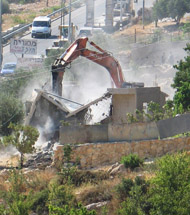
On June 10th 1967, the Israeli government demolished the Moroccan Quarter in the Old City of East Jerusalem to make easier public access to the Western Wall. After the Israeli army called on the inhabitants of the quarter to vacate their homes only a couple of hours before the demolitions took place, a call which was not heard by everybody in the quarter, 135 houses were demolished along with two mosques and other sites. 650 inhabitants were left homeless and several others dead under the rubble of their homes. This demolition was not the first of its kind in the Occupied Palestinian Territories but definitely the starting point to a lifetime struggle with illegal house demolitions by the Israel Occupying forces.
Since 1967, almost 18,000 homes have been demolished in the occupied Palestinian territories for three main reasons: collective punishment and for so-called operational and administrative reasons.
House demolitions started before 1967 by the British Mandate as a means to expel the Palestinians from their homes. Below is a brief history of house demolitions in Palestine:
- 1930s: British administration in Palestine uses house demolitions as a means of quelling the indigenous uprising against British rule.
- 1936-1939: British authorities demolish more than 5,000 Palestinian homes.
- 1948: the newly established state of Israel begins demolishing the homes of Palestinian refugees to prevent their return. More than 125,000 homes, some of which were damaged during the war, were systematically destroyed in a process referred to as "cleaning up the national views".
- 1950s: Israel expels Palestinians from border areas and from villages where part of the Palestinian population remained after the war and demolishes Palestinian homes.
- 1967: Destruction of housing stock during the war included 375 homes in Imwas, 535 homes in Yalu, 550 homes in Beit Nuba, an estimated 135 homes in the Moroccan quarter of the Old City of Jerusalem, 1,000 homes in Qalqilya, in addition to thousands of homes of Beit Marsam, Beit Awa, Jiftlik, and al-Burj as well as refugee camps in the Jericho area and the Gaza Strip.
- 1970s and 1980s: Israel demolishes more than 10,000 refugee shelters in the Gaza Strip to create a so-called security corridor between the southern Gaza Strip and the Sinai and to widen roads in the camps for Israeli military patrols. Demolitions were also part of a campaign to forcibly resettle refugees outside camps.
- 1993-2000: Israel demolished more than 1,000 homes across the occupied Palestinian territories
- 2003: Israel continues to demolish Palestinian homes inside Israel. Demolitions of Bedouin homes in the Naqab (Negev) increased by eight times. More than 100 homes were demolished. An additional 280 homes were destroyed in the Galilee and the Triangle. In total more than 500 homes were destroyed. There are an estimated 12,000 outstanding demolition orders in the Galilee and some 30,000 in the Negev to date.
2000-2004: According to United Nations statistics, 1,500 houses were demolished in the Rafah area alone in Israeli military operations.
September 2000-2007 – 1,900 homes were demolished by the Israeli civil administration for lack of proper permits. According to OCHA, over 94% of Palestinian applications for building permits in Area C were denied between 2000 – 2007. Also according to OCHA, in the first quarter of 2008, 124 Palestinian structures were destroyed for lack of permits in the West Bank.
Between January and June 2008, B'Tselem reported that 37 houses in the West Bank and Gaza Strip were destroyed for military purposes, leaving 141 people homeless. Ten houses in the West Bank were destroyed in the same period for lack of permits, leaving 41 people homeless.
In March 2011, The UN reported a two-fold increase in the number of house demolitions carried out by Israel in the West Bank and East Jerusalem. The UN Relief and Works Agency (UNRWA) recorded 70 demolitions since the start of 2011, displacing 105 Palestinians, of whom 43 were under the age of 18. The demolitions were carried out across the West Bank and East Jerusalem, and ordered by Israeli police, municipal officials and by mandate of the Civil Administration. Talking to Ma’an News Agency, UNRWA spokesman in Jerusalem Chris Gunness said officials were concerned, comparing the number to the average of 24 demolitions per month since 2000, when the Agency began monitoring. According to UNRWA reports, in 2010, the Israeli military destroyed more than 349 Palestinian structures in Area C of the West Bank (under full Israeli control), leaving almost 485 Palestinians, half of them children, homeless. This represents a significant increase over 2009, when 191 structures were demolished. Another 2,606 have seen their property or livelihood destroyed or damaged. According to official information provided by the Israeli Ministry of Defense, there are over 3,000 outstanding demolition orders for Area C structures. The Israeli Committee Against House Demolitions estimates that at least 24,813 houses have been demolished in the West Bank, East Jerusalem and Gaza since 1967.
- House demolitions continue.
Pretexts under which house demolitions are carried out:
Collective Punishment:
The Israeli government uses house demolitions as collective punishment in response to attacks on Israel; families of attackers or of people suspected of carrying out attacks as well as their neighbors or in some cases whole neighborhoods are subject to this illegal violation of human rights. Under the Fourth Geneva Convention, Occupying Powers are prohibited from destroying property or employing collective punishment. Article 53 reads: “Any destruction by the Occupying Power of real or personal property belonging individually or collectively to private persons…is prohibited." According to the Israeli human rights organization, B'Tselem, 47% of houses demolished as punitive punishment were never the homes of attackers or suspected attackers on Israel but were houses adjacent to these homes. Additionally, only 3% of all occupants of demolished houses were given prior notice that the Israeli army would demolish their house or an adjacent one.
Before the policy of collective punishment by means of house demolitions was renewed during the second (Al Aqsa) Intifada, demolitions were only carried out after a military order was issued. Under Israeli law the demolition order is delivered to the family and the family is allowed to appeal to the military commander within 48 hours. Even if the appeal is denied, the family must be allowed to petition the High Court before the house is demolished. In reality, however this is not the case at all. During the current Intifada, Israel treated house demolitions as an imperative military action whereby most of the house demolitions took place at night, without any prior notice or demolition order.
Military Operations:
The second reason given by the Israeli government for house demolition is an operational one which took place during military operations called "clearing operations". Under International Humanitarian Law (IHL), the destruction of property during combat is not illegal as such. Destruction is prohibited unless there is an absolute military necessity to do so. It has been observed however that large-scale demolition operations carried out on civilian homes in the name of necessary military operations immediately after an attack on Israelis suggest otherwise. Gaza more than anywhere else in Palestine has become the target of such actions and false justifications. Miloon Kothari a UN Special Rapporteur speaking to Diakonia in response to Israel's attack on Beit Hannoun on November 8th, 2006 said: " Since 25 June 2006, the most recent Israeli incursion into the Gaza Strip, I continue to receive alarming reports about deliberate attacks by Israeli forces resulting in the destruction of homes, civilian property and infrastructures in the Gaza Strip. Such acts have a devastating impact on civilians particularly, women and children, and create insecurity and psychological trauma. Thus, these forced evictions and unjustifiable destruction constitute breaches of international laws of human rights, war and humanitarian norms. International law strictly prohibits the destruction of private or public property when not absolutely necessary by military operations". Since the beginning of the uprising, 14,852 people have been made homeless by Israeli actions up to 2004.
Administrative policies:
The most common defense used for demolishing houses in east Jerusalem and Palestinian houses in Israel is for administrative reasons. The Israeli government demolishes houses in Area C (Palestine Areas under Israeli military and civil control) because of lack of building licenses even though attaining a building license in east Jerusalem or inside Israel is nearly impossible for Palestinians. Israeli army Legal Advisor Colonel Shlomo Politus told the Israeli Parliament in July 2003 that: "...there are no more construction permits for Palestinians," and the Israeli Army spokesperson told Amnesty International delegates in 1999 that "Our policy is not to approve building in Area C [of the West Bank]". Houses are demolished because Israel wants to expand the Israeli settlements in the West Bank as well as creating permanent facts on the ground. According to B'Tselem Palestinian houses under this justification are normally demolished to meet the following needs:
- Construction of bypass roads: Bypass roads are intended to enable the movement of settlers and military forces protecting the settlements. Houses lying alongside an existing or planned bypass road are designated for demolition.
- Removal of Palestinians from areas adjacent to Israeli settlements: Israeli authorities consistently demolish Palestinian structures that are perceived as hindrances to the establishment and expansion of Israeli settlements. The proximity of the houses to the settlements obviously is not posed as an official reason for the demolition in these cases.
- To prevent transfer of land to Palestinians: Israel demolishes houses in areas located on land that it wants to keep for itself in the final-status agreement. By pursuing this policy, Israel is preventing the Palestinian Authority from demanding the land on grounds that Palestinians live there. Demolition of houses is a convenient way to expel residents from the area.
Israeli forces are still demolishing houses in large numbers under false pretenses and justifications to serve the overall purpose of the Zionist state to uproot and drive as many Palestinians out of their houses and lands as possible and to build more illegal settlements. According to B'Tselem's recent statistics, in the last two years (2006-2007) in the West Bank alone 165 houses were demolished leaving 724 people homeless, and between 2004-2007 in east Jerusalem alone 300 houses were demolished leaving 939 Palestinians homeless. House demolitions have a severe impact on the Palestinian people, affecting the economy and agriculture and causing severe trauma to children, women and men who fall victim to this war crime.
Resources:
Amnesty International
B'Tselem
Diakonia
Electronic Intifada - A history of destruction Report, BADIL, May 18 2004
ICAHD
POICA
FactSheet - Settlements: An Obstacle to Peace
Date posted: March 16, 2011
By MIFTAH
Introduction
On June 4th, 2009 United States President Barack Obama outlined his administration’s policy regarding Israeli settlements in occupied Palestine. According to Mr. Obama:
“Israelis must acknowledge that just as Israel's right to exist cannot be denied, neither can Palestine's. The United States does not accept the legitimacy of continued Israeli settlements. This construction violates previous agreements and undermines efforts to achieve peace. It is time for these settlements to stop.”
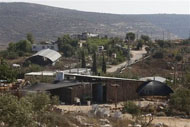
Israel almost immediately began colonizing the West Bank and Gaza Strip after their occupation following the 1967 War. Israeli settlers started creating “Jewish only” residential areas that were heavily defended by the Israeli army. Since their conception settlements and their population have continued to grow and expand across the territories, while annexing major parts of the West Bank (Israel “withdrew” from the Gaza Strip in 2005). All settlements are under control of the Israeli government and their military administration. A viable Palestinian state is impossible to create without a full dismantlement of settlements and their population from the West Bank to the pre-1967 borders.
International Law
Israeli settlements in the West Bank are a clear violation of international law under both The Fourth Geneva Convention and The Hague Regulations. Article 49 of the Geneva Convention prohibits occupying powers to transfer citizens of their own state into occupied territory-while The Hague Regulations prohibit an occupying power to make any changes in the land of an occupied territory unless they are for military purposes and the benefit of the local population.
B’tselem best describes how Israeli settlements violate both protocols of International Law. According to their website,
“The establishment of settlements results in the violation of the rights of Palestinians as enshrined in international human rights law. Among other violations, the settlements infringe the right to self-determination, equality, property, an adequate standard of living, and freedom of movement.
The illegality of the settlements under international humanitarian law does not affect the status of the settlers. The settlers constitute a civilian population by any standard, and include children, who are entitled to special protection. Although some of the settlers are part of the security forces, this fact has absolutely no bearing on the status of the other residents of the settlements.”
Numerous international organizations and bodies have termed the settlements illegal, and call upon Israel to halt all settlement building. Such organizations include the United Nations, the International Court of Justice, the European Union, Amnesty International, and Human Rights Watch.
Resolutions have been passed by the United Nations Security Council condemning Israel for settlements, including UN resolutions 446, 452, 465, 471 and 476. All claim Israeli settlements to have no legality and unanimously terming them all illegal under international law.
Immediately after Israel’s capture of the West Bank and Gaza Strip the United Nations Security Council called for Israel to withdraw from the territories. Condemning Israel’s actions the Security Council passed UN Resolution 242. It was adopted calling on a “withdrawal of Israeli armed forces from territories occupied in the recent conflict.” Israel has ignored the resolution and continues a military occupation in the West Bank, while keeping the Gaza Strip an open air prison while continuing settlement expansion under occupation.
Facts and Statistics
Settlements:
There are currently 121 official settlements in the West Bank and Gaza and 12 built on land annexed to Jerusalem. This is in addition to 100-plus unofficial outposts and thousands of acres of Palestinian land that is secured for this construction. According to the Israeli Central Bureau of Statistics (ICBS), in September 2009, the number of settlers living in the West Bank had reached 310,200. It was estimated that at the end of 2008 almost 194,000 persons were living in Jewish neighborhoods built on land annexed to Jerusalem. The total settler population amounts to 6.5 percent of Israel’s population (for more information, see B'tselem Annual Report, 2009)
By 2008, the settler population (excluding east Jerusalem) had grown at a much faster rate than the general population: 4.7 percent compared to 1.6 percent respectively. In 2007, the population of the settlements (excluding east Jerusalem) grew faster than Israel’s general population: 4.5 percent compared to 1.5 percent. Some 40 percent of the settlements’ population growth was comprised of Jews emigrating from Israel and abroad.
According to the Palestinian Central Bureau of Statistics, at the close of 2009 the number of settlers in the West Bank reached 517,774, with over half of these living in the Jerusalem Governorate. Their report also shows that the number of settlers who live in Israeli settlements in Palestine increased by more than 40 times during the period 1972-2009.
Despite the illegality of the settlements, and construction has been continuing at a high rate. In 2009, there were 1,703 housing starts in West Bank settlements (ICBS). This number compares to 1,518 starts in 2006, 1,471 starts during 2007, and 2,107 starts in 2008, during which construction was expedited in the wake of the November 2007 Annapolis conference. Construction on 2,077 housing units was completed in 2009. ICBS also reported that as of December 2009, soon after the construction moratorium went into effect, a total of 2,778 housing units were in various stages of construction in West Bank settlements (for more information see http://www.fmep.org/reports/archive/vol.-20/no.-3/settlement-timeline).
Unrecognized settlements, referred to in the media as “outposts” also exist. It is impossible to pinpoint an exact number on “outposts” but estimates showcase the number at around 100 and higher. Such settlements are usually very small scale and their numbers change constantly. While they are illegal under Israeli law, the government continues to fund their construction and not a single outpost was evacuated in 2009.
Update: On November 25, 2009, the Government of Israel announced a building freeze on settlement construction and planning. The ten month moratorium on Israeli settlements ended in September 2010. The construction rate in the following year, however has allowed the settlers to close the gap created by the building freeze. The trend of the fast growing number of settlements continues into 2011, as statistics show that the construction rate of illegal settlements in the West Bank is nearly double the construction rate inside Israel (Peace Now, September 2011).When the ten month long building freeze ended in September 2010, work began on 2,598 new settlement units in the West Bank. Further, the construction of 3,700 housing units continued throughout the moratorium, on the grounds that the construction had started before November 2009. Since the end of the building freeze, the construction of 2,149 housing units have been completed (Peace Now, September 2011).
East Jerusalem
One of the most contentious issues debilitating the peace process is that of east Jerusalem. Under international law, east Jerusalem is occupied territory, which means that Israel has no right to it by virtue of having taken control of it militarily, and its operations in that area violate the Fourth Geneva Convention, as well as the International Covenant on Economic, Social and Cultural Rights, and the International Convention for the Elimination of all forms of Racial Discrimination (Palestinian Academic Society for the Study of International Affairs). Israel has been called upon continually to adhere to international law but without effect: The 2003 Road Map for Peace stipulated that Israel was to end all settlement expansion, and the Middle East Quartet reiterated the importance of that requirement in 2009, when it condemned ongoing plans to expand settlements in east Jerusalem. The Quartet stipulated that Israel must freeze all activity "including natural growth", dismantle outposts erected since March 2001, and "refrain from demolitions and evictions in east Jerusalem"[The Guardian, Friday 19 March 2010].
Nevertheless, Israel has pursued a steady strategy of attempting to drive Palestinians out and incentivize Jewish settlement in that area. Since Israel captured the city in 1967, nearly 200,000 Jews have moved to east Jerusalem. In 2010, Israel declared plans to build 1,600 new homes in the area. Peace Now reports that this brings the numbers to over 8,000 proposed homes in east Jerusalem. In May, 2010 construction began on 14 housing units in Ras al-Amud, a neighborhood comprising 14,000 Palestinians [Haaretz, May 9, 2010]. “If you look at 2009 and 2010, you understand what the trend is here. The trend is massive expansion," said Arieh King, who runs a group that buys land for Jews in east Jerusalem and other areas. He said his organization's goal is to create "Jewish continuity" from Jerusalem to settlements in the West Bank, making it harder to eventually disconnect the two [AP, May 20, 2010]. The Inter Press Service reported that “Israeli Interior Minister Eli Yishai announced that Israel would never stop construction in east Jerusalem, the section of the city that Palestinians want for the capital of their hoped-for future state” [IPS, May 14, 2010]
Israel’s announcement of settlement expansion in East Jerusalem occurred during a visit of the United States’ Vice President Joe Biden in March, 2010. Biden released the following statement:
I condemn the decision by the government of Israel to advance planning for new housing units in East Jerusalem. The substance and timing of the announcement, particularly with the launching of proximity talks, is precisely the kind of step that undermines the trust we need right now and runs counter to the constructive discussions that I’ve had here in Israel. We must build an atmosphere to support negotiations, not complicate them.
Settler Violence
Settler violence is a daily occurrence against Palestinians. The majority of settler households harbor weapons and constantly harass local Palestinians by stealing privately owned land, uprooting olive trees, shooting Palestinians, and disrupting agricultural growth for Palestinian farmers. Numerous international groups have condemned violence against Palestinians by the minority settler population but their complaints have largely fallen on deaf ears.
The case of Hebron
Hebron is a city notorious for settler violence. Hebron claimed 42% of the 290 recorded settler violence incidents in 2008 across the West Bank. A minority of Israeli settlers established residency in the city center amongst a Palestinian population. According to the Temporary International Presence in the City of Hebron (TIPH) there are approximately 500 Israeli settlers living in Hebron, with an additional 7,000 living in settlement suburbs. Meanwhile the city of Hebron is home to around 170,000 Palestinians. Israeli settlers in Hebron are particularly hostile, forcefully taking over Palestinian houses in the city in a bid to uproot the local population. Outbreaks of violence are a regular occurrence in the fragile city. According to TIPH:
“In April 2002 IDF took full control of the entire city. Permanent watchtowers were constructed in area H1 in 2005. Since then the Israeli army operates over the entire area in violation of the agreements.
More than 100 roadblocks, fences, walls and checkpoints are put up in the city center around the settlements and the access roads to them. This separates the Jewish settlers and the Palestinian residents. Furthermore it severely hampers the freedom of movement.
Due to the restrictions and violence surrounding the settlements as well as prolonged curfews, large areas of the old city are deserted. Several main shopping streets are closed by military order.”
The economic impact settlements are creating on the Hebron Palestinian community is severe.
Israeli Human rights groups have recorded the difficult living situations working against Palestinians. B’Tselem and the Association for Civil Rights in Israel found in late 2006 that more than 40% of Palestinian apartments in the City Center had been vacated and over 75% of Palestinian businesses had closed due to difficult living conditions caused by settler harassment and restrictive Israeli army policies.